

Shopify and Etsy are two of the biggest names in ecommerce, but they provide very different ways to sell online.
With Shopify, you build your own ecommerce website. You decide how it looks, what you sell, how you market your products, and — to a large extent — how the whole shopping experience works.
Etsy takes a different approach. Instead of building a store from scratch, you add your products to an existing online marketplace — one used by millions of shoppers, particularly those looking for handmade, vintage, craft, and creative goods.

So, which is better?
In this Shopify vs Etsy comparison, I’m going to highlight the key reasons to choose one platform over the other — and explain why, for some sellers, using both may actually make the most sense. First up, my quick verdict, followed by a deeper dive.
Quick verdict
Shopify is the better choice if you want to build a standalone ecommerce store and brand. It gives you much more control over your store design, lets you sell a much wider range of products, and comes with considerably more powerful tools for marketing, dropshipping, shipping, SEO, and selling in person.
Etsy is the better option if your priority is getting products in front of an existing audience quickly. Its marketplace gives you access to millions of shoppers without requiring you to build and promote an entire website first — and it’s particularly well suited to merchants selling handmade, vintage, and craft products.
But it doesn’t necessarily have to be a case of Shopify or Etsy. You can connect the two platforms easily and sell on both — using Shopify as your main online store while using Etsy to reach its large marketplace audience. So we recommend using both.
I’ll start my full comparison with a look at the reasons to use Shopify over Etsy.
Reasons to use Shopify over Etsy
1. You get your own website
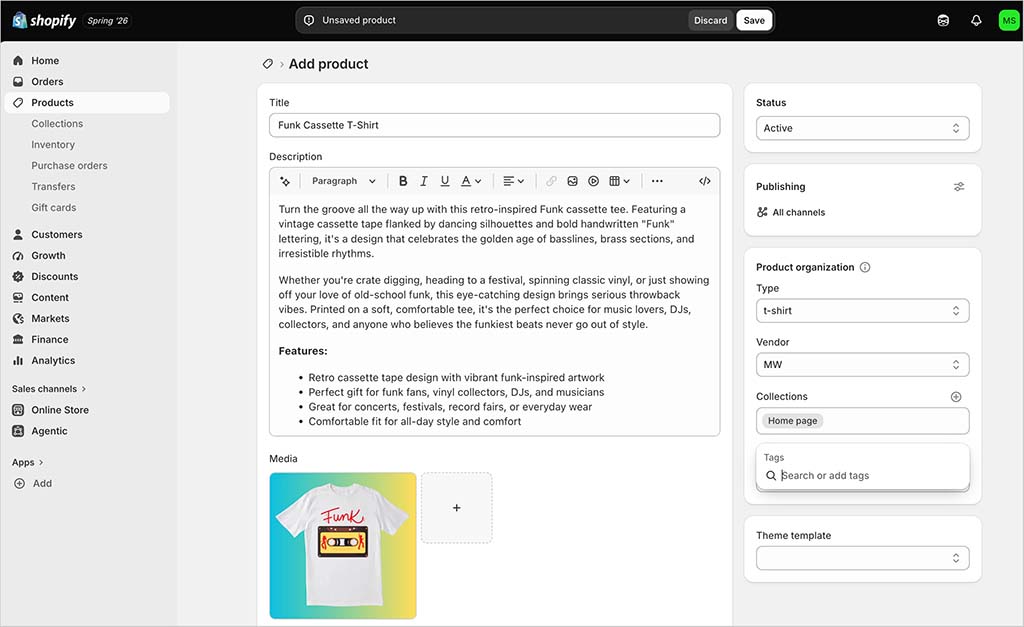
The biggest difference between Shopify and Etsy is that Shopify gives you a standalone website.
When you sell with Shopify, your store can operate on your own custom domain name, with your own navigation, branding, content, and checkout experience.
And all this is relatively easy to set all this up — I’ve found that so long as I have my content and product details ready to go, I can generally build a Shopify store in a couple of hours.
With Etsy, you’re essentially renting space inside somebody else’s online marketplace. You can add a logo and banner to your store, but beyond this, the shopping experience remains distinctly Etsy-like.
For me, this isn’t necessarily a problem — Etsy shoppers are familiar with the platform and probably expect its standardized look.
But if you want to build a distinctive ecommerce brand that customers recognize as your own, Shopify is the much stronger option.
2. Shopify gives you much more control over your brand
This leads into another key Shopify advantage: customization.
Shopify gives you access to a huge selection of store themes, and these can be extensively customized to suit your brand. If you have coding skills, you can tweak things further by editing your store’s HTML and CSS.
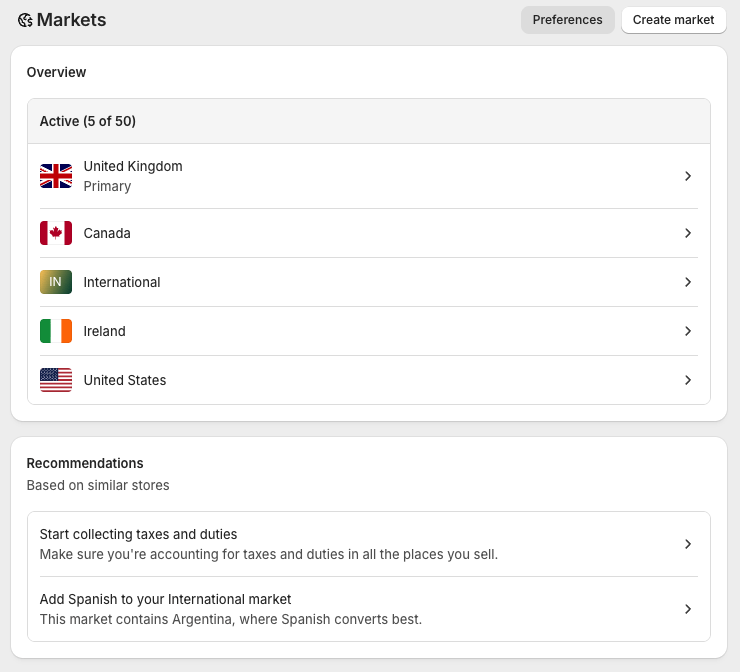
Shopify also gives you more control over how your store works for different markets, with multilingual and multi-currency features available.
Etsy gives you far less room to create this sort of tailored experience. Your branding largely sits within Etsy’s branding.
So if establishing a recognizable brand is central to your business plan, I’d lean strongly toward Shopify.
3. You can sell a much wider range of products with Shopify
When it comes to what you can actually sell, Shopify is much less restrictive than Etsy. Broadly speaking, if a product is legal to sell in your country, and selling it doesn’t breach Shopify’s terms and conditions, you can add it to your store.
Etsy is much more prescriptive.
Its marketplace is primarily designed for products that are:
- made by the seller
- designed by the seller
- handpicked by the seller
- sourced by the seller.
In practice, this means Etsy is mainly focused on:
- handmade items
- vintage products
- craft supplies
- personalized products
- digital goods.
If that’s what you’re selling, this restriction may not matter at all — but if you want the freedom to build a more conventional ecommerce business selling a broad range of products, Shopify is the more obvious option.
4. Shopify is much better for dropshipping
Dropshipping involves selling products that are stored and fulfilled by a third-party supplier. When somebody buys from you, your supplier receives the order and ships the product directly to the customer.
It’s a low-risk, appealing business model — and if it’s something you’re interested in doing, Shopify’s a much better platform choice than Etsy.

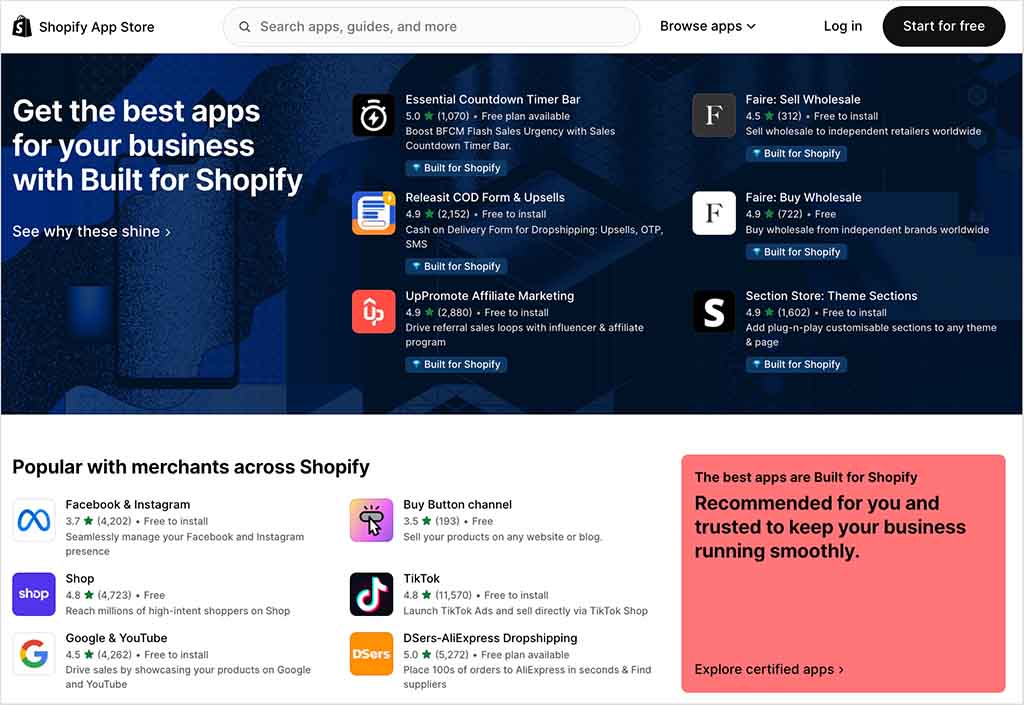
Shopify has a huge ecosystem of dropshipping apps and suppliers — at the time of writing, I counted 934 dropshipping integrations in its app store.
Etsy is more restrictive here. It lets you work with third parties to manufacture or fulfill products you’ve designed, and integrate print-on-demand services like Printful and Printify.

But for conventional dropshipping — where you simply pass orders on to suppliers for deliery — Shopify is by far the better platform.
5. Its marketing and SEO tools are considerably stronger
Setting up a new Shopify store comes with one major disadvantage: nobody knows it exists. To build a successful business with the platform, you have to generate traffic yourself through activities like SEO, advertising, social media, PR, and content marketing.
However, Shopify gives you much better tools than Etsy for doing this.
For starters, it includes a built-in blogging tool. This isn’t as sophisticated as a WordPress blog (or even a Wix one), but it’s perfectly adequate for publishing articles designed to attract search traffic.
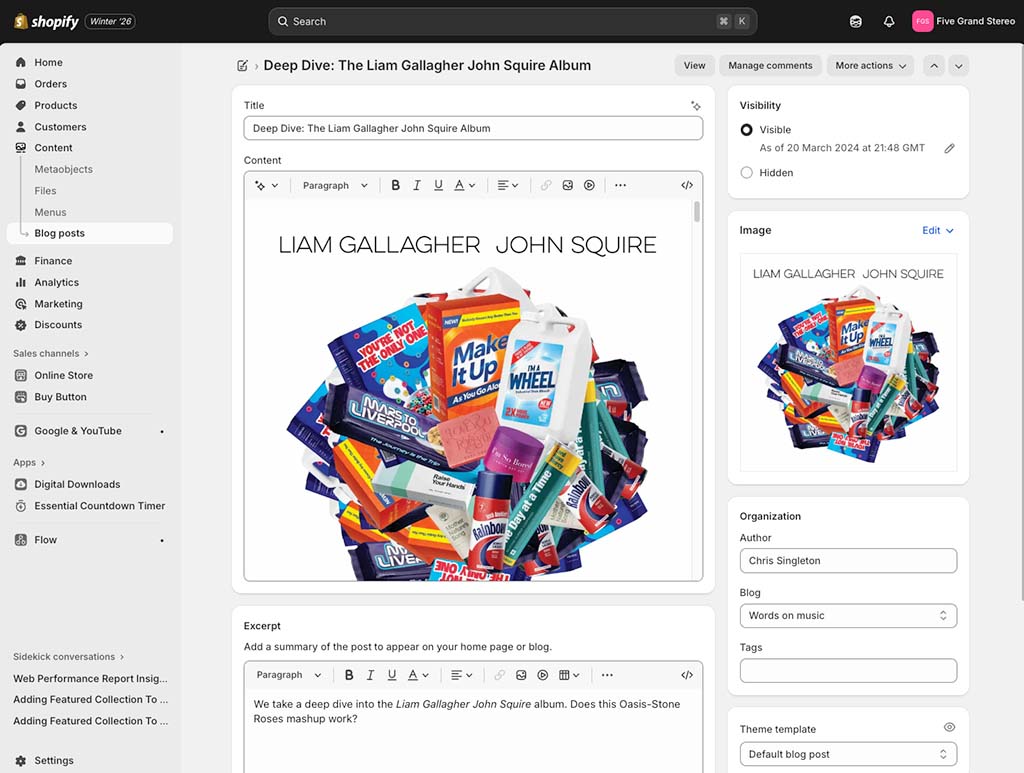
Etsy doesn’t have any blogging tools at all.
Shopify also provides built-in email marketing functionality via its free Shopify Messaging app. This lets you capture email addresses, send newsletters, and create basic automated email sequences from within the Shopify ecosystem.
Etsy doesn’t provide comparable built-in email marketing tools, meaning that third-party software is likely to play a bigger role here.
And when it comes to SEO, Shopify gives you considerably more control than Etsy. It lets you edit key SEO elements including URLs, site navigation, page titles, headings, meta descriptions, image alt text, redirects, and robots.txt files, and you can extend the platform’s SEO functionality further using third-party apps.

Etsy’s SEO controls are much more basic. You can optimize elements such as your product titles, descriptions, tags, and image alt text, but you don’t get the same level of control over technical SEO settings or the wider structure of your store.
So while Shopify makes you work harder to attract an audience in the first place, it gives you significantly better tools for building one through search, content, and email marketing.
6. Shopify is considerably better for selling in person
If you sell products both online and in physical locations, Shopify is the much stronger choice.
Its point-of-sale system — bundled with every plan — lets you take payments in person while keeping your physical and online inventory entirely in sync. This makes Shopify suitable for retailers operating a combination of ecommerce stores, physical shops, pop-up stores, market stalls, and other real-world selling locations.
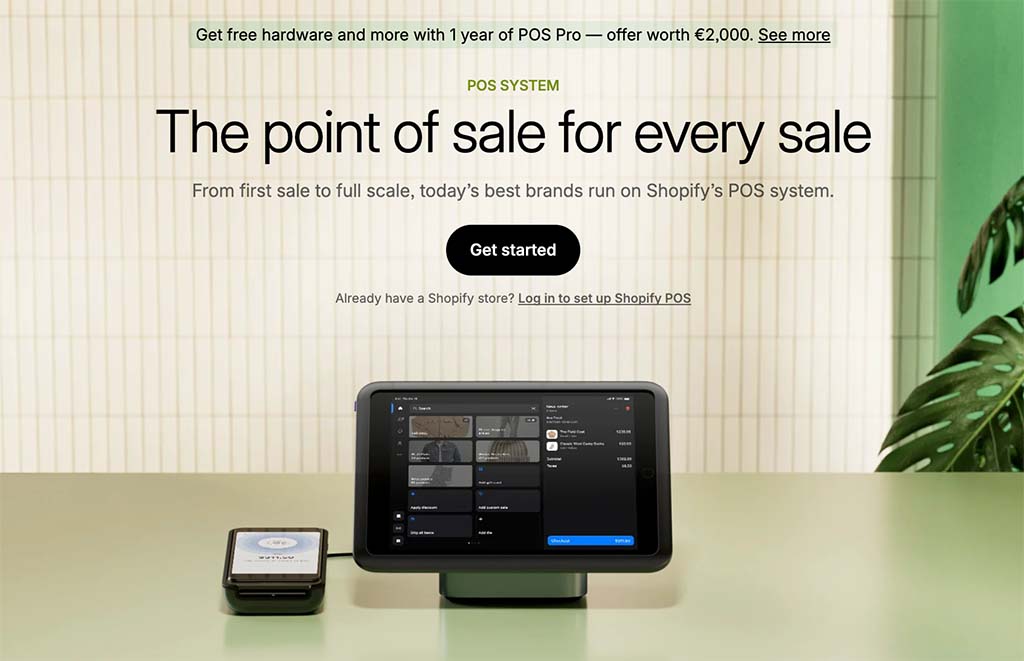
Etsy can be integrated with Square for some point-of-sale functionality, but this is available only in certain countries and the selling hardware options are more limited.
So, for a business that takes omnichannel retail seriously, Shopify is a much better choice than Etsy.

7. Shipping is more flexible
Both platforms provide useful shipping features, but Shopify gives you more control.
You can create shipping rules based on factors such as price, weight, and quantity, connect your store to fulfillment providers, and access discounted carrier rates through the platform’s “Shopify Shipping” service.
Etsy handles shipping basics well, particularly for merchants shipping handmade and one-off products themselves. It lets you print shipping labels directly from the platform and provides postage discounts with supported carriers.
But businesses with more complex shipping requirements will generally find Shopify more capable.
8. Shopify can become the center of a larger ecommerce operation
Perhaps the most important long-term Shopify advantage is that the platform gives you much more room to expand.
It lets you build your own website, develop a recognizable brand, add marketing apps, sell internationally, introduce sophisticated shipping rules, sell in physical locations, and integrate the platform with a very large range of third-party services.
And crucially, you can do all this and still sell on Etsy too — third-party integrations are available that let Shopify merchants list and synchronize products across both platforms. This means you can use Shopify as the main hub for your ecommerce business while continuing to benefit from Etsy’s marketplace traffic.
For an ambitious ecommerce business, that’s a very attractive setup.
Shopify pricing plan
Pricing per month (USD)
Basic
$39
Grow
$105
Advanced
$399
Shopify Plus
From $2,300/mo
Reasons to use Etsy over Shopify
So far, Shopify may sound like the obvious winner.
But Etsy has some major advantages of its own — and for the right type of merchant, they can outweigh Shopify’s superior feature set.
1. You get access to a ready-made audience
This is Etsy’s killer feature.
When you create a Shopify store, you start with no visitors. You have to generate them through SEO, advertising, content, social media, or other marketing activity. And this can take a long time to get right.
But with Etsy, you’re putting your products into an established marketplace used by millions of shoppers.
This doesn’t mean that sales will automatically start rolling in — you’ll still face a lot of competition, and to create an effective Etsy storefront, you’ll need to put a lot of effort into product photography, description writing, pricing strategy, and marketplace SEO.
But you’re still starting somewhere shoppers already go specifically to buy things. And for a new merchant with no existing audience, this is a major advantage.
2. Its audience is particularly relevant to creative sellers
Etsy doesn’t just have a large audience — it has a very specific one.
People visit Etsy expecting to find handmade products, vintage items, craft supplies, personalized gifts, artwork, and other creatively produced goods. If that’s the sort of product you sell, Etsy puts you in front of a very warm audience.
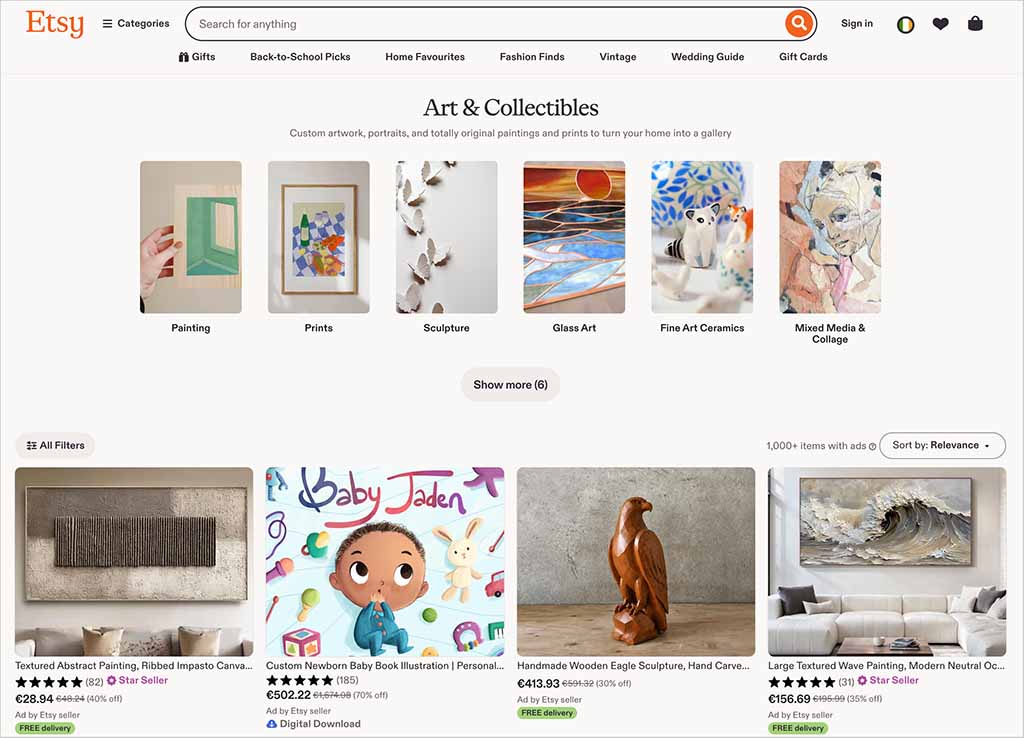
This is important.
Getting 1,000 people who are actively looking for your type of products to visit an Etsy storefront can be far more valuable than generating 10,000 irrelevant visits to a standalone website.
So if you sell handmade goods, listing them on Etsy is a no-brainer.
3. It’s easier to get started
There’s much less work involved in setting up an Etsy shop than a Shopify one.
With Shopify, you’re building an entirely new website. This means choosing a theme, creating pages, organizing navigation, connecting a domain, developing a brand, configuring shipping, and then adding your products.
As I mentioned earlier, Shopify does a good job of making all this relatively straightforward — but there’s still a learning curve involved, particularly for absolute web design novices.
But with Etsy, you’re simply adding products to an existing marketplace. You’ll still need to spend time creating strong listings, taking quality photographs, writing descriptions, and setting sensible prices, but you don’t have to become a web designer in the process.
So, if your goal is simply to start selling a few products as quickly as possible, Etsy is arguably the easier route.
4. You can avoid a monthly subscription
Shopify’s entry-level standalone store plan costs $39 per month.
Etsy’s main marketplace doesn’t charge an equivalent monthly platform fee. Instead, you pay listing and transaction fees.
Instead, you pay:
- $0.20 per product listing
- 6.5% transaction fee on each sale
Payment-processing charges apply on top of this.
So Etsy isn’t necessarily cheaper once you’re generating significant sales — its percentage-based charges can become substantial. But its lack of a standard monthly subscription lowers the barrier to entry considerably.
What about Pattern by Etsy?
It’s worth noting that Etsy doesn’t entirely limit you to marketplace selling. Its Pattern service (pictured below) lets you create a standalone ecommerce website for $15 per month.
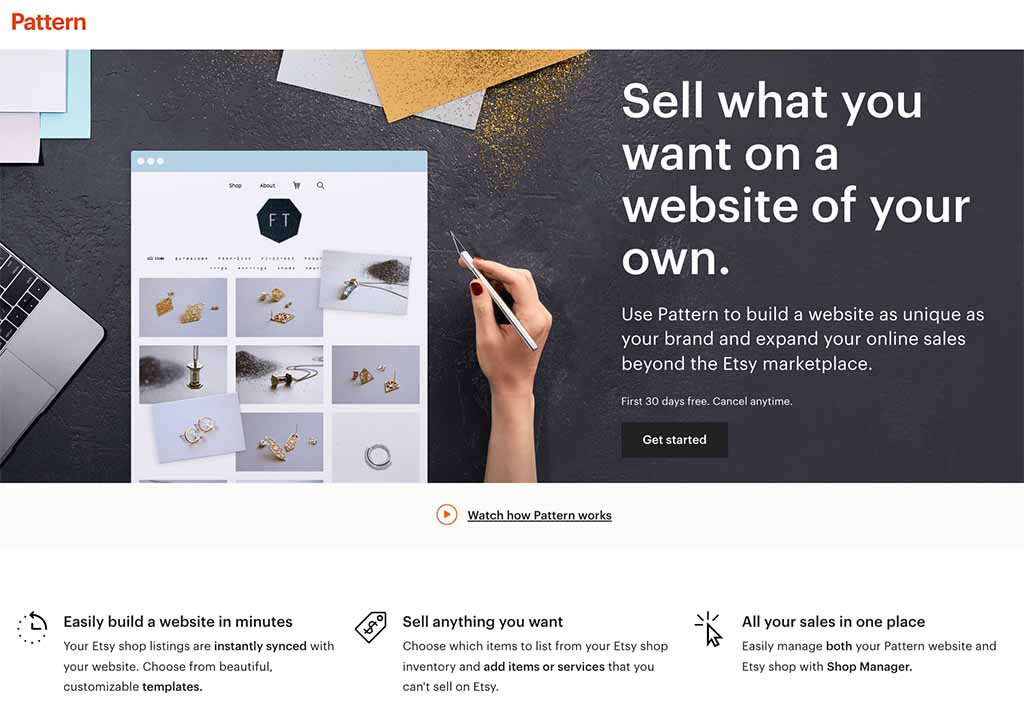
You can use your existing Etsy catalog to populate a Pattern store, with inventory synced between the two platforms. Alternatively, you can add products directly to Pattern — and these don’t have to meet Etsy’s usual handmade, vintage, or craft-related product requirements.
At $15 per month, Pattern is considerably cheaper than Shopify’s $39-per-month Basic plan. However, it’s also a much more basic ecommerce solution. When building a test store with it, I found that many of the important selling and marketing tools available in Shopify — abandoned-cart recovery, native email marketing, advanced SEO features, and dropshipping functionality — were missing. Without these features, I couldn’t see myself using Pattern to try to scale an ecommerce business.
5. Etsy gives you two search opportunities
Although its SEO controls are fairly basic, Etsy does have a useful visibility advantage.
An Etsy product can potentially be discovered through Etsy’s own search engine and through external search engines such as Google.
This means you can optimize your listings for shoppers searching Etsy while also benefiting from the considerable authority Etsy itself has with traditional search engines.
In other words, you’re potentially targeting two distinct search audiences: people searching directly on Etsy and people searching the wider web.
For new sellers in particular, that can be a useful advantage.
User reviews
So far, you’ve heard my thoughts on both platforms. But what do their customers think?
Well, user feedback on Shopify is generally positive.
On software review platforms including Capterra and G2, Shopify has an average score of around 4.5 out of 5, with users frequently highlighting its ease of use, professional templates, and large selection of integrations. On TrustRadius, its average score is 8.6 out of 10.
Etsy is slightly harder to compare on a like-for-like basis because it’s reviewed more frequently on consumer-focused sites than business software directories. On Trustpilot, for example, it garners mixed reviews — with many users praising the platform’s reach and built-in audience but others complaining about transaction fees, overzealous policy enforcement and poor customer service.
Verdict
Shopify and Etsy are different enough that declaring one the outright winner isn’t particularly helpful.
But if I had to pick one platform on which to build a long-term ecommerce business, I’d choose Shopify.
It gives you your own website; much more control over your brand; stronger marketing and SEO tools; better shipping functionality; comprehensive point-of-sale features; and far more flexibility over what and how you sell. It’s simply a more powerful platform for building a standalone store.
I’d choose Etsy instead if I sold handmade, vintage, craft, or other creative products — and my main priority was getting them in front of an existing audience quickly. The platform is easier to start with, doesn’t require you to become a web designer, and its marketplace can give a new business access to shoppers from day one.
But I’d argue that for many merchants, the smartest approach may be to avoid treating the Shopify vs Etsy debate as an either/or decision.
Instead, I’d recommend building your main ecommerce presence with Shopify and connecting it to Etsy using a third-party integration — there are plenty available in the Shopify app store. This gives you the brand control and selling functionality of your own Shopify store — while still putting selected products in front of Etsy’s large marketplace audience.
That approach involves more administration — and potentially additional app fees — but it gives you the best of both ecommerce worlds. You can try both Shopify and Etsy using the links below.
Alternatives to Shopify and Etsy
In terms of hosted store builders, there are lots of alternatives to Shopify available — with key ones including Wix, Squarespace, GoDaddy, Webflow and Big Cartel. You can learn more about some of these below:
As for online marketplaces, the two main alternatives to Etsy are Amazon and eBay. You can learn more about the differences between Shopify and Amazon here.
Shopify vs Etsy FAQs
Is Shopify better than Etsy?
Shopify is better than Etsy if you want to build a standalone ecommerce store and have extensive control over your branding, marketing, SEO, and shipping. Etsy is a better choice if your priority is reaching an existing marketplace audience quickly — particularly so if you sell handmade, vintage, craft, or creative products.
What is the main difference between Shopify and Etsy?
The main difference is that Shopify lets you build your own ecommerce website, while Etsy lets you sell products through an existing online marketplace. Shopify gives you more control over your store and brand; Etsy gives you easier access to an established audience of shoppers.
Can I use Shopify and Etsy together?
Yes. You can connect Shopify and Etsy using third-party integrations (available from the Shopify app store) that let you list and synchronize products across both platforms. This means you can use Shopify as your main ecommerce website while also selling your products to Etsy’s audience.
Which is cheaper, Shopify or Etsy?
Etsy has a lower barrier to entry because its main marketplace does not charge a standard monthly subscription. Instead, you pay a $0.20 listing fee per product, a 6.5% transaction fee on sales, and payment-processing charges. Shopify’s Basic plan costs $39 per month, but you can avoid transaction fees if you use Shopify’s own payment processing system, Shopify Payments. This matters if you end up selling a high volume of products.
Which is better for selling handmade products, Shopify or Etsy?
Etsy is particularly well suited to selling handmade products because its audience specifically visits the marketplace looking for handmade, vintage, craft, personalized, and other creative goods. Shopify can also be used to sell handmade products, but you’ll need to attract your own audience for them via SEO, advertising, social media, and other marketing activities.
Which is better for SEO, Shopify or Etsy?
Shopify gives you much more control over SEO than Etsy. You can edit URLs, navigation, page titles, headings, meta descriptions, image alt text, redirects, and robots.txt files, and add further SEO functionality through apps. Etsy lets you optimize elements such as listing titles, descriptions, tags, and image alt text, but offers much less control over technical SEO and site structure.
Can you build your own website with Etsy?
Yes. Etsy’s Pattern service lets you create a standalone ecommerce website for $15 per month. You can populate it using your existing Etsy catalog or add products directly to it. However, Pattern provides far fewer ecommerce, marketing, SEO, and dropshipping features than Shopify.
Which is better for selling in person, Shopify or Etsy?
Shopify is considerably better for selling in person. Its point-of-sale system lets you take payments at physical locations while keeping your online and offline inventory synchronized. Etsy can integrate with Square to provide some point-of-sale functionality, but its hardware and availability are more limited.

Chris Singleton is the Founder and Director of Ecommercetrix.
Since graduating from Trinity College Dublin in 1999, Chris has advised many businesses on how to grow their operations via a strong online presence, and now he shares his experience and expertise through his articles on the Ecommercetrix website.
Chris started his career as a data analyst for Irish marketing company Precision Marketing Information; since then he has worked on digital projects for a wide range of well-known organizations including Cancer Research UK, Hackney Council, Data Ireland, and Prescription PR. He then went on to found the popular business apps review site Style Factory, followed by Ecommercetrix.
He is also the author of a book on SEO for beginners, Super Simple SEO.