

Please note: this article contains affiliate links. If you buy through these, we may receive a commission at no extra cost to you. Using our links supports our work.
Most Shopify dropshipping stores fail — before they even launch.
And it’s not because people can’t build a Shopify store. It’s because they choose the wrong product to sell — or try to sell it the wrong way.
The result? Weeks of work, and nothing to show for it.
So in this Shopify dropshipping guide, I’m going to walk you through a simple 4-step framework for getting a successful dropshipping business off the ground with the platform.
First, we’ll find a profitable niche.
Then, we’ll build your Shopify store.
After that, we’ll add products.
And finally, we’ll promote your store.
But before we go any further, let’s take a very quick look at how dropshipping works.

How dropshipping works
With dropshipping, you don’t hold any stock yourself. Instead, when someone buys a product from your store, the order gets passed to a supplier — and they ship it directly to your customer. You’re only charged if somebody buys a product.
That means low upfront costs — but also a lot of competition. And this makes choosing the right niche incredibly important.
Let’s look at that now.
1. Find a profitable niche
Your niche is the type of products you sell. Get this wrong, and nothing else works.
Now, many dropshipping beginners try to sell trending products. And this is usually a mistake — everyone else is trying to sell them, and you may be dealing with a passing fad. Instead, you should try to find products that pass two of three important tests.
First, the solution test: does your product solve a real problem or frustration?
Second, the passion test: does it appeal to a specific, engaged audience — like pet owners or hobbyists?
And third, the scroll-stop test: is it visually interesting enough to grab attention on platforms like TikTok or Instagram?
If your product ticks two of these three boxes, you’re on the right track — and it’s time to validate your idea with data.
To do this, start with search demand. Tools like Google Trends show whether interest is growing or staying consistent over time.
You can also use keyword research tools like Semrush to check how many people are searching for your product each month.
Then, look at advertising activity. Facebook’s Ad Library and TikTok’s Creative Center both let you see active ads. If multiple advertisers are promoting similar products consistently, it usually means those products are profitable.

Finally, check marketplaces like Amazon or Etsy. Look for high review counts, bestseller labels, and lots of similar listings — these are all signs of real demand.
If your niche checks out, it’s time to build your store.
2. Build your Shopify store
Starting a free trial
To get going with Shopify, you need to start a free trial. Now, the standard Shopify trial lasts just three days, but there’s a special one available that can be extended to three months. You can access this here.
Once you’ve signed up to Shopify, you’ll find that getting a basic store together can be done pretty quickly. For a detailed overview of how to do this, I’d suggest reading our full guide to creating an online store, but I’ll give you a brief overview of the process here now.
Choosing a theme
First, choose a theme from the Shopify Theme Store. With dropshipping, it’s best to pick something clean, fast, and conversion-focused — “Horizon” is a good starting point for most.
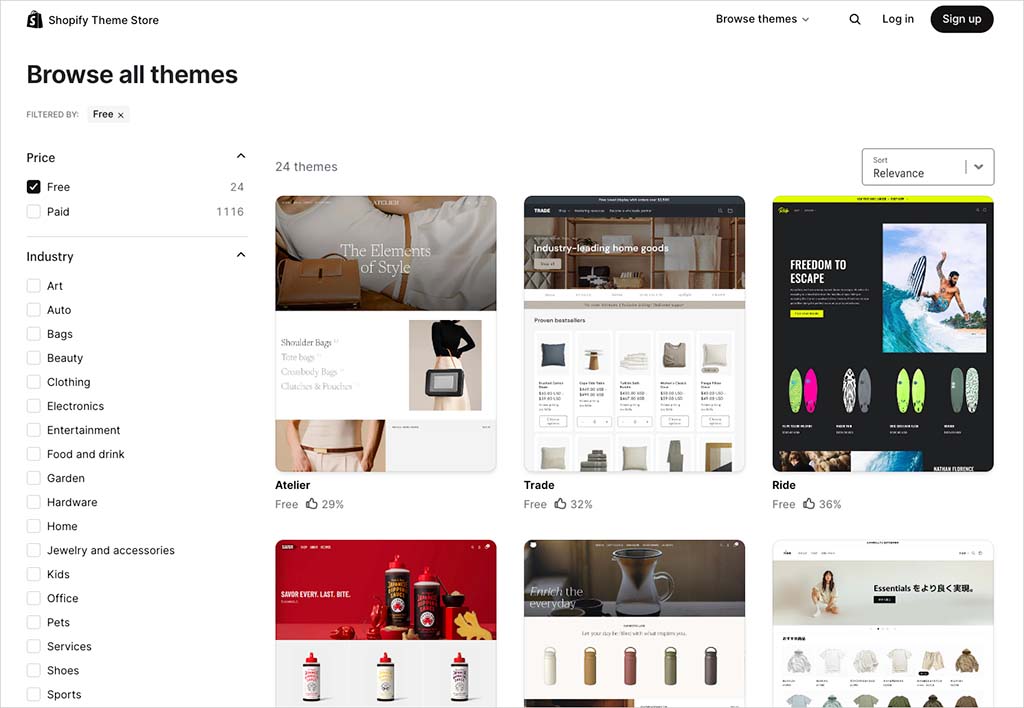
Then, you need to customize your theme — you can add your own branding by going to Online Store > Themes > Edit Theme.
Adding key pages to your store
You now need to add key pages to your Shopify store. Always include “About Us”, “Shipping”, “Returns” and “Privacy” pages. Shopify provides useful templates for these, which you can access using the below links:
You can create pages in the “Online Store > Pages” section of your Shopify dashboard, and you can add them to menus by going to the “Content > Menus” section.
Connecting a payment processor
Next, you need to connect a payment processor to your store — go to “Settings > Payments” in your Shopify dashboard to do this. For most users, Shopify’s own payment gateway, Shopify Payments, will be the best choice, as it doesn’t include transaction fees. It’s not available in all countries, however.
Connecting a domain name
Finally, you’ll need to connect a domain name to your store — without this you’ll struggle to get customers to part with their credit card details, and Google might not trust you either. You can buy a domain name directly from Shopify, or you can connect one you already own. To do either, just go to Settings > Domains, choose your preferred option, and follow the instructions provided.
With that done, it’s time to add products.
3. Add your products
To add products to your new store, you’re going to need a dropshipping app.
Dropshipping apps let you choose what products to sell, list them on your storefront, and automatically notify suppliers when a sale is made.
Popular options here include DSers, Zendrop, and Spocket — I recommend DSers and Zendrop for most new dropshipping merchants.
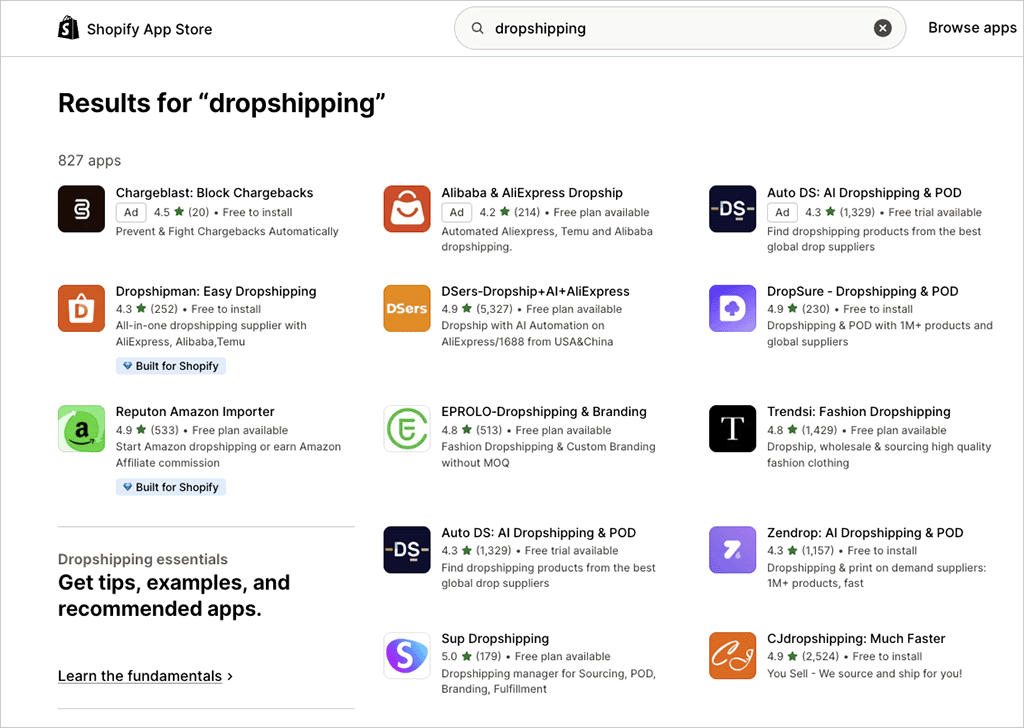
To add any of these apps to your store, go to the Shopify App Store, search for the app name, and hit “Install.”
Once you install a dropshipping app, you can select the products you’d like to sell, and then ‘push’ them to your Shopify store. This lists them on your store, and copies all the product information across to it.
There’s something REALLY important to remember here though: you need to make these product descriptions your own. Store visitors and Google won’t be impressed with generic information that’s already been published on a bunch of competing stores.
So, ensure that visitors always encounter unique, compelling product descriptions that spell out benefits as well as specs.
4. Promote your dropshipping store
At this point, your store is basically ready — and if you like you can launch it.
But without marketing, you can forget about sales.
There are four key things to focus on when crafting a marketing campaign for a dropshipping store: content marketing, ads, SEO, and email.
I’ll walk you through each of these briefly now.
Content marketing
Content marketing is the easiest place to start when promoting your dropshipping store. Creating short videos, posts, or blog content can drive significant traffic for free. An engaging 15-second video on TikTok costs nothing to make, but can do wonders for store visits.
The video below gives you a detailed explanation of how to craft a content marketing campaign.

Paid ads
Next, think about running paid ads on Google, Facebook, TikTok, or Instagram. These ads will give you the quickest way to get traffic to your store — but you’ll obviously have to have a budget to run them. On the plus side, however, you can run test ads easily, and see whether they drive sales, before committing to a full ad campaign.
Search engine optimization
Now, when it comes to search engine optimization, I’m going to point you in the direction of our full ecommerce SEO guide — this contains everything you need to know about the topic, and I’d really encourage you to read it.
But if you’re looking for quick SEO wins, the key tasks you’ll need to cover are:
- creating relevant product titles
- crafting detailed product descriptions
- writing accurate meta descriptions
- including product keywords in your URLs
- encouraging people to link to your store.
All these can boost its visibility in search. But for full SEO advice, do check out our ecommerce SEO guide.
Email marketing
Finally, there’s email marketing. Collect emails using pop-ups on your store, and use them to run promotions and send abandoned cart reminders — these can drive a lot of revenue. Shopify’s Messaging app lets you do both for free.
Wrapping up
And that’s it — your simple dropshipping blueprint to go from zero dollars to your first sale. I hope you’ve found this tutorial helpful; you’ll find links to all the resources I’ve mentioned in the piece below.
Shopify dropshipping resources
Good luck with your dropshipping project — and if you have any questions, just drop them in the comments.
Shopify dropshipping FAQs
What is Shopify dropshipping?
Shopify dropshipping is a way to sell products online without holding inventory yourself. When a customer places an order on your Shopify store, the order is automatically sent to a supplier, who then ships the product directly to the customer (charging you a fee in the process).
Is Shopify dropshipping good for beginners?
Yes, Shopify dropshipping can be suitable for beginners because it has low upfront costs and you don’t need to manage stock. However, because of the low barrier to entry, competition is fierce — so success depends heavily on choosing the right niche, creating a trustworthy store, and marketing your products effectively.
How do I choose a good dropshipping product?
A good dropshipping product usually solves a real problem, appeals to a passionate audience, and is visually interesting enough to perform well on social media.
Do I need money to start Shopify dropshipping?
You don’t need a huge budget, but you will usually need some money for your Shopify plan, domain name, apps, product samples, and marketing. You can start lean, but paid ads and testing products may require a budget.
Which Shopify dropshipping app should I use?
Popular Shopify dropshipping apps include DSers, Zendrop, and Spocket. DSers and Zendrop are good starting points for many new merchants, but the best choice depends on the products you want to sell and the delivery times you are comfortable with.
Can I use supplier product descriptions on my store?
It’s better not to use supplier product descriptions exactly as they are. Generic descriptions can make your store look less trustworthy and can hurt your SEO. Rewrite them so they clearly explain the product’s benefits, features, and use cases.
How do I promote a Shopify dropshipping store?
The main ways to promote a Shopify dropshipping store are content marketing, paid ads, SEO, and email marketing. Short-form videos on platforms like TikTok and Instagram can be especially useful for testing product ideas and driving traffic.
How long does it take to make your first dropshipping sale?
There’s no fixed timeline. Some stores make sales quickly, while others need weeks or months of product testing, ad testing, and store improvements. Choosing a validated niche and promoting your store consistently will improve your chances of success.
Is dropshipping still profitable?
Dropshipping can still be profitable, but it is competitive. The stores that tend to do best are those that choose a strong niche, write unique product pages, work with reliable suppliers, and invest in good marketing.
Do I need a domain name for my Shopify dropshipping store?
Yes, a custom domain name is strongly recommended. It makes your store look more professional, helps build trust with customers, and can support your SEO efforts.

Chris Singleton is the Founder and Director of Ecommercetrix.
Since graduating from Trinity College Dublin in 1999, Chris has advised many businesses on how to grow their operations via a strong online presence, and now he shares his experience and expertise through his articles on the Ecommercetrix website.
Chris started his career as a data analyst for Irish marketing company Precision Marketing Information; since then he has worked on digital projects for a wide range of well-known organizations including Cancer Research UK, Hackney Council, Data Ireland, and Prescription PR. He then went on to found the popular business apps review site Style Factory, followed by Ecommercetrix.
He is also the author of a book on SEO for beginners, Super Simple SEO.