

My quick verdict on Shopify vs WordPress
Shopify is the better choice for most people who want to build an online store. It’s easier to set up, simpler to maintain, and gives you most of the ecommerce tools you need — including hosting, payments, security, and point-of-sale features — straight out of the box. This makes it particularly suitable for beginners and merchants who want to focus on selling rather than managing the technical side of their website.
WordPress is the stronger option when flexibility and control are the priority. It gives you more choice over your site’s design, more powerful content management features, deeper SEO control, and a much larger ecosystem of plugins. However, you’ll usually need to spend more time configuring, maintaining, and securing a WordPress store.
Shopify or WordPress: which gives you the better online store?
These two platforms work in very different ways — and choosing the wrong solution can leave you with a platform that’s either too limited, too complicated, or too expensive for your needs.
So in this comparison, I’m going to compare Shopify and WordPress in the 10 key areas that matter most — and help you work out which platform is right for your ecommerce project.
I’ll start with a look at how both platforms work.
How Shopify and WordPress work
Shopify is an “all-in-one” ecommerce platform. You pay a monthly fee to use it, and for this you get hosting, store-building tools, and payment processing options in one place.
Now, when people talk about “WordPress,” they can mean two different things.
First, there’s “hosted WordPress,” available at wordpress.com. This is quite similar to Shopify — it’s a pay-as-you-go solution that gives you the key tools to build a website or store.
Then there’s “self-hosted” WordPress, which you download from WordPress.org. This is a free content management system that you install on your *own* hosting setup. It’s more powerful and more configurable than the hosted version — but harder to set up.
Both Shopify and WordPress are extremely popular platforms, with Shopify used to power 6.9 million stores and WordPress used to power 37 million websites.
In this comparison, I’m comparing Shopify to self-hosted WordPress, because that’s the version most professional ecommerce merchants use.
Now let’s move on to the key areas you need to look at before making a decision between these two platforms.

1. Ease of use
If your priority is getting an online store live easily, Shopify is the clear winner.
This is because with WordPress, you have to stitch quite a lot of things together before you can start selling.
You’ll need to:
- choose a hosting provider
- install the WordPress software
- add a theme
- install an ecommerce plugin
- configure payments
- connect a domain registered with a third party…
…and test your site carefully to ensure that everything’s working as expected.
None of this is impossible — but it’s time-consuming, and involves scope for error.
Shopify is a lot more straightforward here. Hosting, ecommerce tools, checkout functionality, domain registration, and security features are all provided “out of the box,” and its interface is more beginner-friendly too.
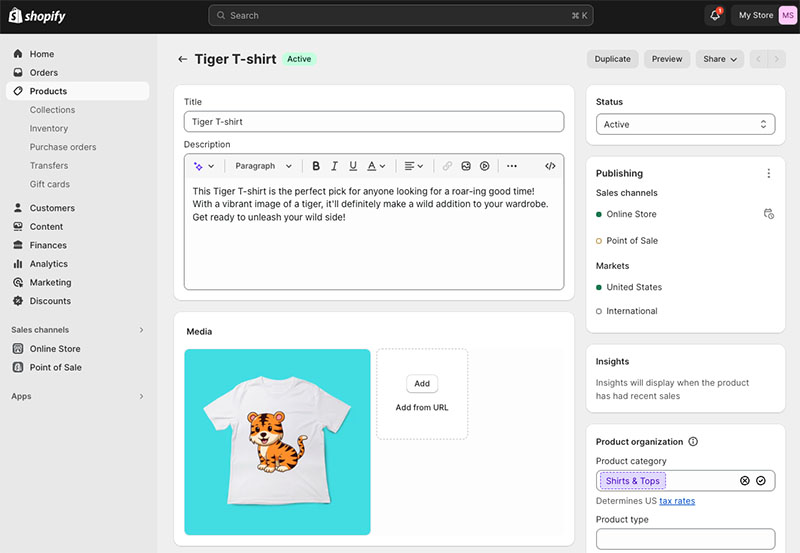
For me, the main advantage of Shopify’s “all-in-one” approach is that it’s a big time-saver. When building Shopify stores, I’ve actually managed to get them live within an hour or so — despite my familiarity with WordPress, equivalent store builds have always taken me longer.
2. Visuals and designs
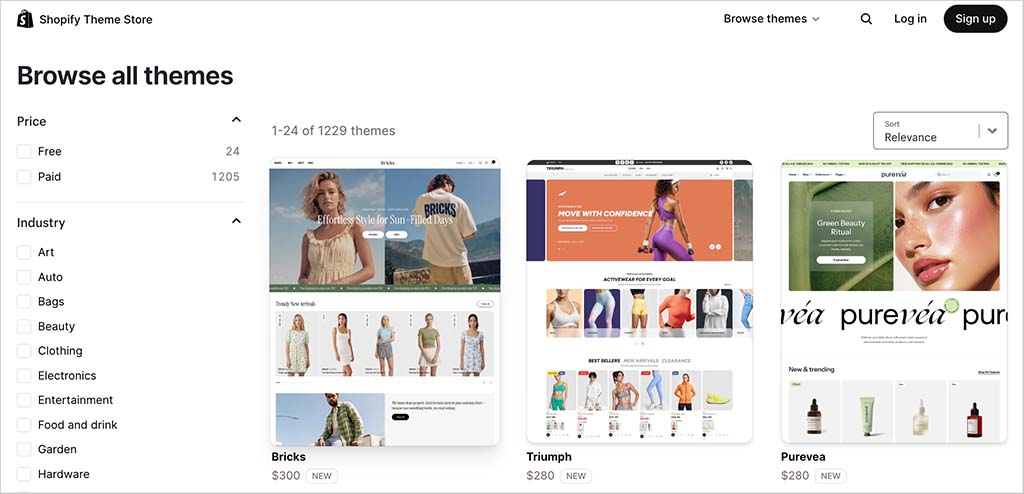
Shopify gives you access to a professional set of ecommerce-focused themes. They’re polished, mobile-friendly and designed with selling in mind. You’ll find links to these in the video description.
However, the number of free Shopify themes is very small, and its paid ones can be expensive.
WordPress gives you far more choice here. There are thousands of WordPress themes available, both free and paid, covering almost every type of website and design style.
So if you want maximum choice over how your site looks, WordPress wins.
3. Ecommerce features
Because Shopify is built specifically for selling online, it gives you a strong set of ecommerce features.
It gives you everything you need to:
- create products
- manage inventory
- accept payments
- offer discounts
- recover abandoned carts
- sell on different marketplaces.
You can create a very powerful ecommerce store with WordPress too. But this involves finding the right ecommerce plugin for your needs.
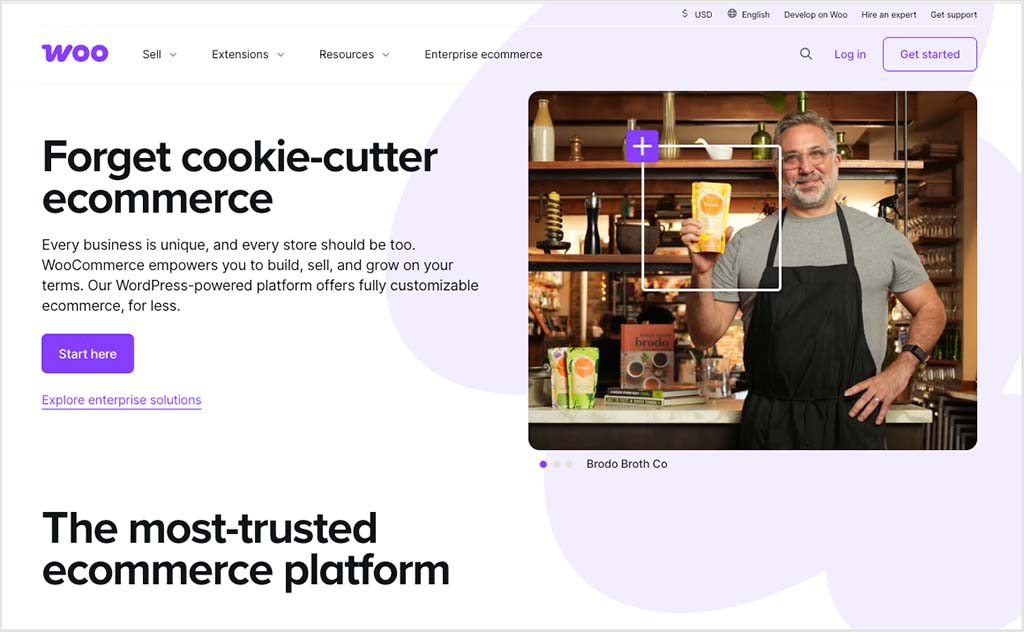
WooCommerce is the solution most WordPress merchants turn to — its feature set is broadly comparable to Shopify’s. But setting it up right involves more configuration time.
And when it comes to in-person selling, Shopify has a clear edge. This is because it bundles point-of-sale features with all its plans, and gives you access to a wide range of in-person selling hardware too — card readers, receipt printers, cash registers and more.
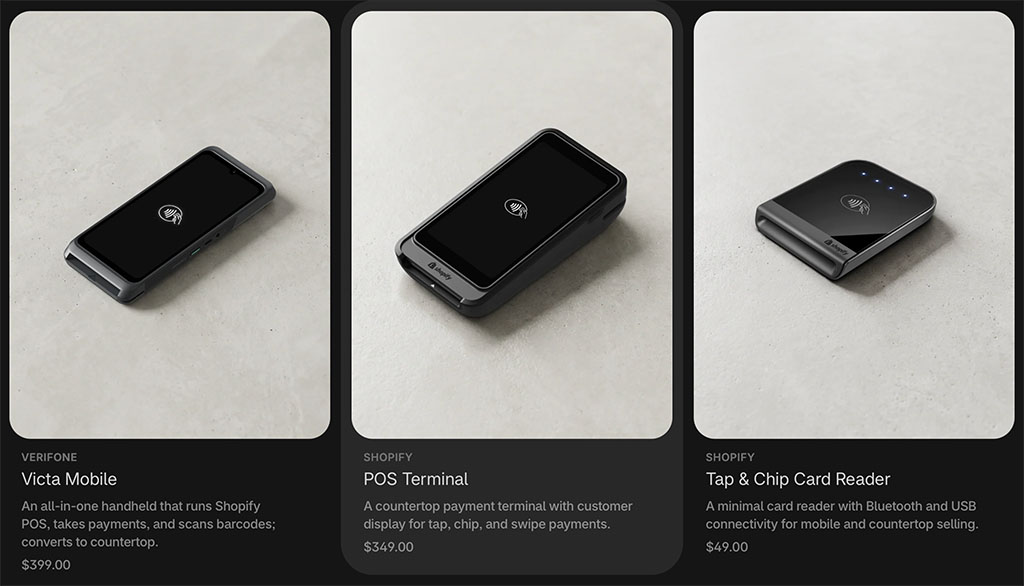
WordPress can be made to work as a point-of-sale solution too — but you’ll need to involve third-party hardware and software to make this work.
Tip: to get a sense of how a WooCommerce setup compares to a Shopify one, watch our video comparison of both platforms below.

4. Pricing
At first glance, WordPress can look like the cheaper option, because the software itself is free.
But running a WordPress ecommerce store still costs money.
You’ll need hosting. You may need a premium theme. You may need paid plugins. And if you’re not comfortable managing the technical side of things yourself, you may need developer support.
That said, WordPress can work out cheaper than Shopify in many situations — especially if you’re technically confident and are smart about hosting provider selection.
Shopify costs are usually more predictable. You pay a monthly fee for access to most of the core ecommerce features you need. But these costs can increase significantly if you add paid apps, use premium themes or move onto more advanced plans.
It’s also worth mentioning that it’s easier to try Shopify out. You can’t really test self-hosted WordPress without sourcing hosting and installing software, but Shopify gives you an extendable trial that lets you use the platform for three months.
5. Content management
Shopify includes a blogging tool, and it’s fine for basic content marketing.
But WordPress ultimately gives you a much more powerful content management system.
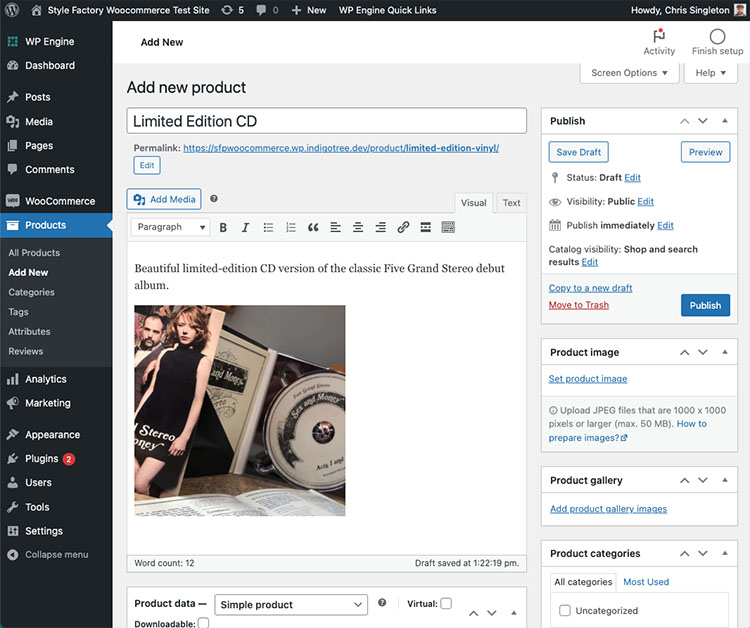
It gives you far more control over categories, tags, archives, author pages, revision history, and editorial workflows than Shopify does.
So if your ecommerce strategy depends heavily on blog posts, buying guides, reviews, tutorials, or other editorial content, WordPress is the stronger option.
6. SEO
Shopify provides the key features needed to create SEO-friendly product pages, collections, blog posts and metadata. It also uses robust hosting and a content delivery network, meaning your site will load quickly too.

But WordPress definitely gives you more control over the technical side of SEO.
It lets you choose your own hosting setup, fine-tune site speed, control more aspects of your code, customize URL structures more extensively, and use specialist SEO plugins.
So if you have advanced SEO requirements, WordPress can offer more flexibility.
A word of warning here, however. Although a fast, well-built WordPress site can provide a truly excellent SEO setup, I’ve seen badly configured WordPress sites — ones with slow hosting, too many plugins or other technical issues — performing much worse in search than a standard Shopify store.
7. Flexibility
Both platforms let you extend your store’s functionality using add-ons.
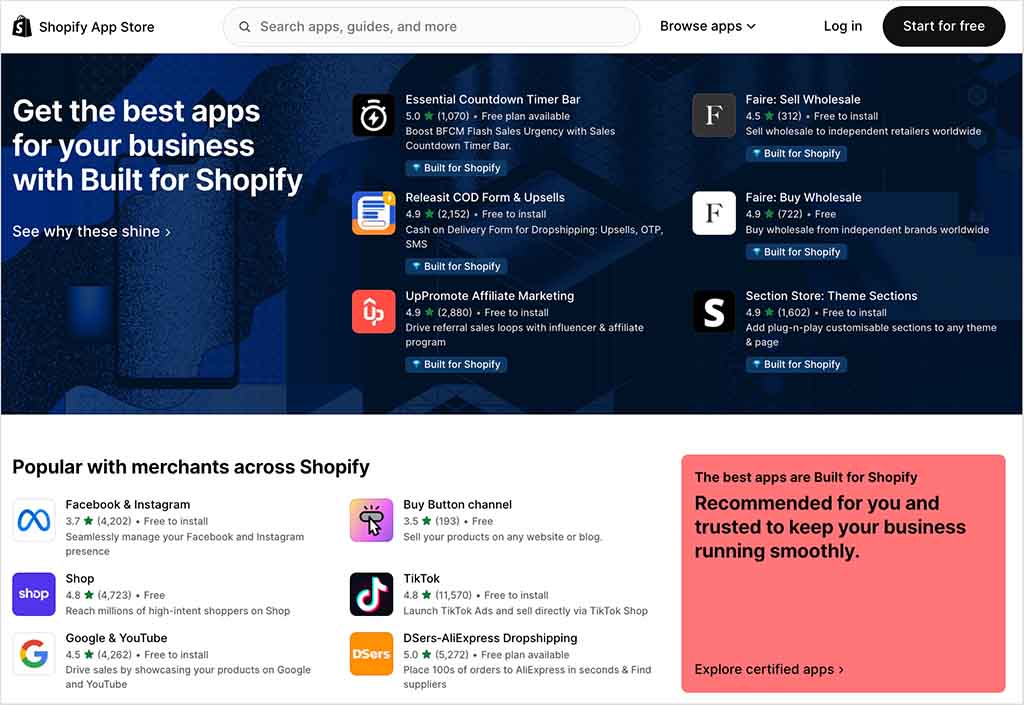
With Shopify, these come in the form of apps. There are lots of these available (around 21,000 at the time of writing), and you can use them to facilitate dropshipping, print-on-demand, reviews, subscriptions, email marketing, upselling and more.
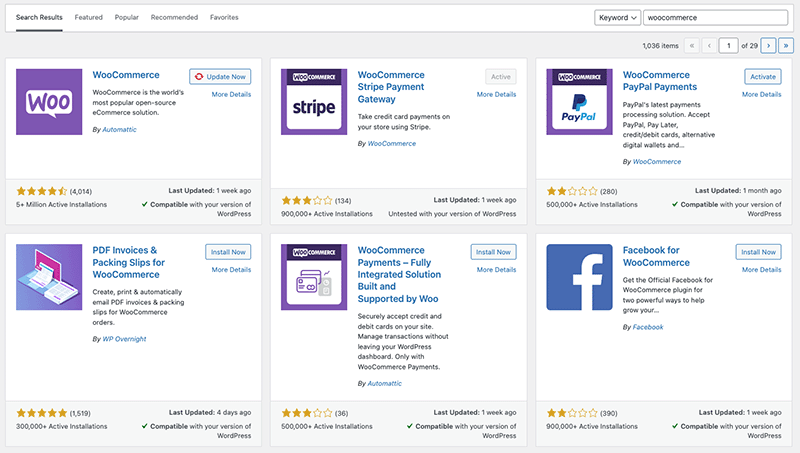
But WordPress provides a much bigger ecosystem, in the form of its plugin library. This contains tens of thousands of plugins, and these can extend the functionality of your WordPress site in a vast number of ways.
Additionally, because WordPress is open source, you (or your developer) have much more freedom to customize how your site works.
So if you need a highly custom store, unusual functionality, or deep integration with other systems, WordPress can be the better choice.
8. Maintenance and security
With self-hosted WordPress, responsibility for site security lies entirely with you. If you don’t regularly update WordPress, your theme, and your plugins, your site can become very vulnerable to getting hacked.
And because WordPress sites often rely on software from several different developers, these updates can sometimes clash with each other and break your site.
With Shopify, site maintenance and security updates are handled for you automatically in the background. You don’t have to worry about server updates, software updates or ecommerce plugin compatibility in the same way.
9. AI features
Both Shopify and WordPress give you ways to use AI when building and running your store.
But Shopify’s AI tools are more tightly integrated into the platform.
Its Shopify Magic features can help you generate product descriptions, write marketing copy, create blog content, and edit images.
And its Sidekick chatbot is particularly useful. You can use this to perform a variety of design tasks, but perhaps more importantly, it lets you interrogate your store data using plain English.
For example, you can ask Sidekick to show you sales from a particular country, identify the product pages that convert best, or find repeat customers.
I’ve uncovered some genuinely useful insights about conversion patterns by asking Sidekick to analyze sales data from Shopify stores I manage.
With WordPress, AI is available too — but as with much else, largely through plugins. This gives you more choice over the AI tools you can use, but it also means devoting more time to decision-making, plugin setup, and testing.
10. Support
With a Shopify subscription, you get access to 24/7 chat support. So if something goes wrong, there’s an obvious place to go for help.
But when a WordPress site breaks, it’s hard to know who to turn to. A fault can be down to problems with a hosting platform, a theme, an ecommerce plugin, or some custom code — all of which may involve different providers.
User feedback
So far, you’ve heard my thoughts on the Shopify vs WordPress debate. But what do users think?
To find out, I collated data from four of the leading software review sites. You can take a look at this below — as you can see, the average user ratings scores are reasonably similar, with WordPress users expressing slightly more satisfaction with their platform choice.
| Site | Shopify user rating | WordPress user rating |
| Capterra | 4.5/5 (6,701 reviews) | 4.6/5 (14,987 reviews) |
| G2 | 4.4/5 (6,563 reviews) | 4.4/5 (9,538 reviews) |
| Trustpilot | 1.3/5 (4,898 reviews) | 1.8/5 (263 reviews) |
| TrustRadius | 8.7/10 (704 reviews) | 8.7/10 (3,352 reviews) |
| Average user score (out of 5) | 3.6 | 3.8 |
Verdict
For ecommerce beginners, Shopify is the better choice.
It’s easier to set up and maintain, and it gives you most of the tools you need to start selling out of the box.
It’s particularly good if you want to launch quickly, and spend more time marketing your store than managing the technical side of it.
WordPress is the better choice if flexibility matters more than simplicity.
If you need a highly customized site, advanced content publishing features, deeper SEO control, or a store that works in a very specific way, WordPress can be an excellent option.
However, a WordPress ecommerce store usually involves more setup, more maintenance, and more technical responsibility than a Shopify one.
Related resources
Frequently asked questions about Shopify vs WordPress
Is Shopify better than WordPress for ecommerce?
For most ecommerce beginners, Shopify is a better choice than WordPress. It is easier to set up and maintain, and includes hosting, security, payment features, and core ecommerce tools out of the box. WordPress offers more flexibility and control, but generally requires more configuration and technical maintenance.
Is Shopify or WordPress better for beginners?
Shopify is better for beginners. It provides hosting, ecommerce functionality, checkout features, security, and store-building tools as part of one platform. With self-hosted WordPress, you need to arrange hosting, install WordPress, choose a theme, add an ecommerce plugin, and configure other technical aspects of your setup yourself.
Is WordPress cheaper than Shopify?
WordPress can be cheaper than Shopify, but this depends on your setup. The WordPress software itself is free, but you still need to pay for hosting and may also need premium themes, plugins, or developer support. Shopify charges a predictable monthly fee, although paid apps and premium themes can increase its overall cost.
Is Shopify or WordPress better for SEO?
WordPress gives you more control over technical SEO — you get more options when it comes to configuring hosting, site speed, URL structures, code, and specialist SEO plugins. Shopify still provides the key SEO features most online stores need and takes care of much of the technical infrastructure for you. A well-configured WordPress site can offer excellent SEO capabilities, but a poorly maintained one can perform worse than a standard Shopify store.
Can I use WordPress instead of Shopify for an online store?
Yes. You can turn a WordPress website into a powerful online store using an ecommerce plugin such as WooCommerce. This can give you ecommerce functionality broadly comparable to Shopify’s, but setting everything up correctly typically requires more configuration time.
Which is more customizable, Shopify or WordPress?
WordPress is more customizable than Shopify. It’s open-source, gives developers extensive control over site code, and supports tens of thousands of plugins. This makes it particularly suitable for stores that need unusual functionality, highly customized designs, or deep integrations with other systems.
Is Shopify easier to maintain than WordPress?
Yes. Shopify is considerably easier to maintain than a self-hosted WordPress store. Shopify handles hosting, server maintenance, security updates, and much of the underlying software management for you. With WordPress, you are responsible for keeping the WordPress software, themes, plugins, hosting, and security setup properly maintained.

Chris Singleton is the Founder and Director of Ecommercetrix.
Since graduating from Trinity College Dublin in 1999, Chris has advised many businesses on how to grow their operations via a strong online presence, and now he shares his experience and expertise through his articles on the Ecommercetrix website.
Chris started his career as a data analyst for Irish marketing company Precision Marketing Information; since then he has worked on digital projects for a wide range of well-known organizations including Cancer Research UK, Hackney Council, Data Ireland, and Prescription PR. He then went on to found the popular business apps review site Style Factory, followed by Ecommercetrix.
He is also the author of a book on SEO for beginners, Super Simple SEO.