

Wix or Shopify — which is better for your ecommerce project? I’ve built lots of stores with both, and in this post, I’m going to share my take on which is better for online selling. Read on as I spell out the key pros and cons of both platforms — and reveal a hidden limitation of one of these tools that makes it much harder to scale your business internationally.
My quick verdict on Wix vs Shopify
If your needs are fairly simple, Wix can work — it pairs a flexible website builder with easy-to-use selling tools.
However, when it comes to serious ecommerce, Shopify is the clear winner. Its feature set is purpose-built for selling at scale, and its Shopify Markets feature provides a much more comprehensive set of tools for selling internationally. From localized pricing and languages to duties, taxes and regional storefronts, Shopify makes expanding into new markets considerably easier than Wix.
Shopify also provides more advanced capabilities for things like tax handling, dropshipping, and point-of-sale selling. On top of that, its much larger app ecosystem makes it easier to extend your store’s functionality as your business grows.
I’ll start with the reasons to use Wix over Shopify.
Reasons to use Wix over Shopify
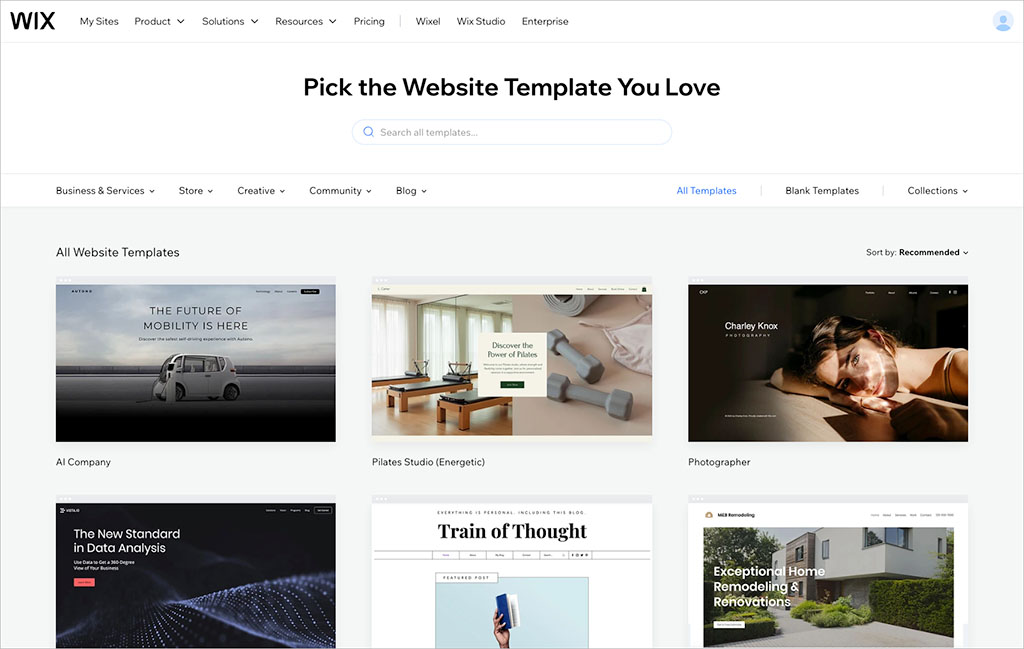
1. Wix gives you more templates
Wix gives you over 3,000 free templates to choose from. But Shopify only gives you access to 24. Although more templates for Shopify are available from the platform’s theme store, these can be quite expensive.
2. Wix gives you more website building features
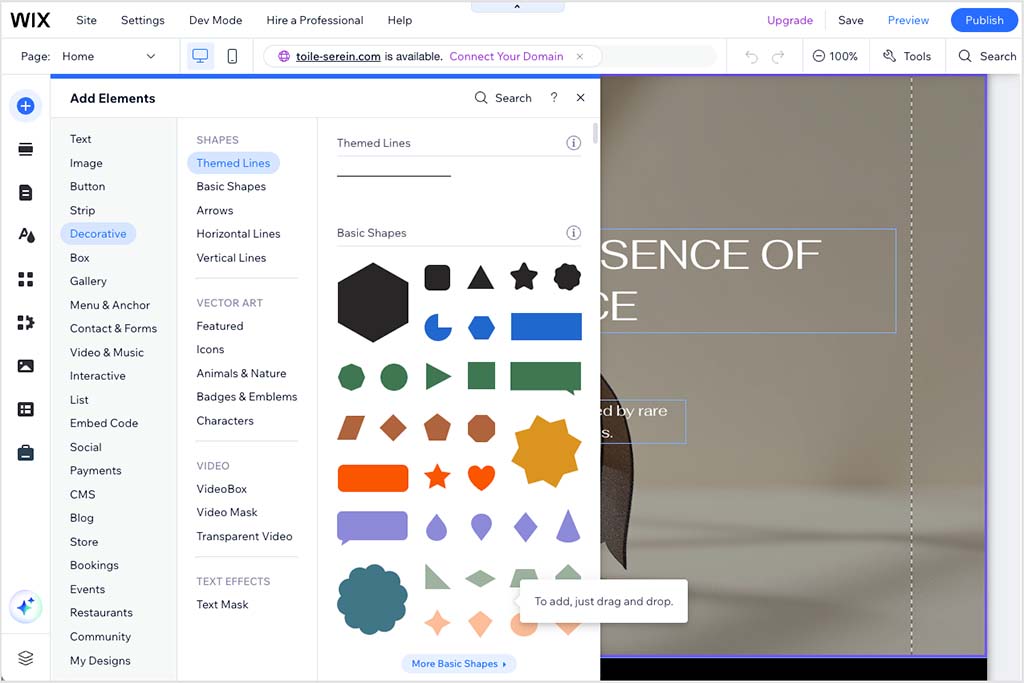
Because Wix started life as a website building tool rather than an ecommerce solution, it gives you a lot more features than Shopify for laying out content. Its drag-and-drop editor gives you much more fine-grained control over the appearance of web pages, galleries, and forms than the Shopify equivalent.
Wix also gives you built-in autosave features and revision histories — neither of which you’ll find in Shopify.
3. Wix lets you use more product options
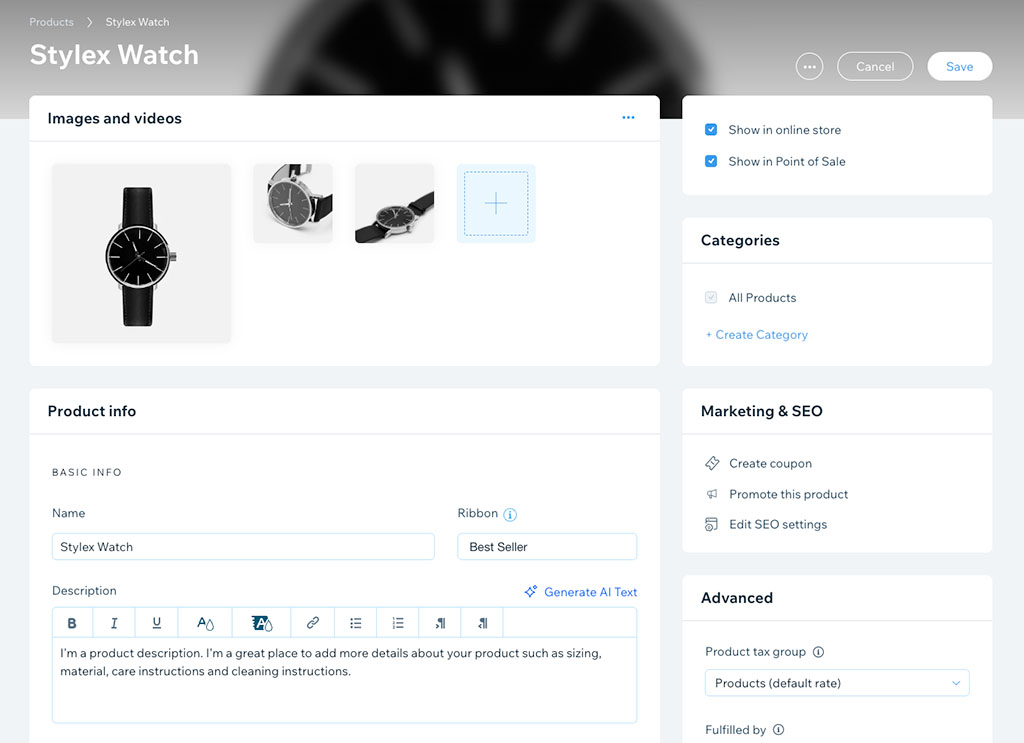
Product options let you sell products in lots of different colors, shapes, and sizes. And while Shopify currently limits you to just three product options, Wix lets you work with six.
Shopify does let you add apps to your store that increase or remove these limits, but these involve extra fees.
4. Wix doesn’t charge transaction fees
A payment gateway is the software you use to process credit card payments on your store. With Shopify, if you don’t use its built-in payment gateway, you’ll get charged transaction fees.
But Wix doesn’t apply any charges for using third-party payment gateways, and this can save you a lot of money, particularly if you’re a high-volume seller.
5. Wix lets you translate your site into more languages.
Both Wix and Shopify let you translate your website into different languages. But while Shopify restricts you to just 20 translations, Wix lets you create 180.
One caveat to note: Wix’s multilingual features are not yet available for websites built with its newer Harmony editor, so you’ll currently need to use the classic Wix Editor to take advantage of them.
6. Wix gives you phone support
Wix gives you access to phone support on all its plans. But on all its non-enterprise plans, Shopify only lets you use live chat support.
OK — so those are the key things that Wix does better than Shopify. If you have any thoughts so far, do drop them in the comments. And if you’d like to try either platform out, you can start a free Wix site here, or grab an extended Shopify trial here.
Now let’s take a look at the reasons why you might want to use Shopify over Wix.

Reasons to use Shopify over Wix
1. It’s much better for international selling
The biggest difference between these two platforms comes down to international selling. Both Shopify and Wix now let customers view prices and check out in multiple currencies, but Shopify provides a much more comprehensive set of tools for selling globally.
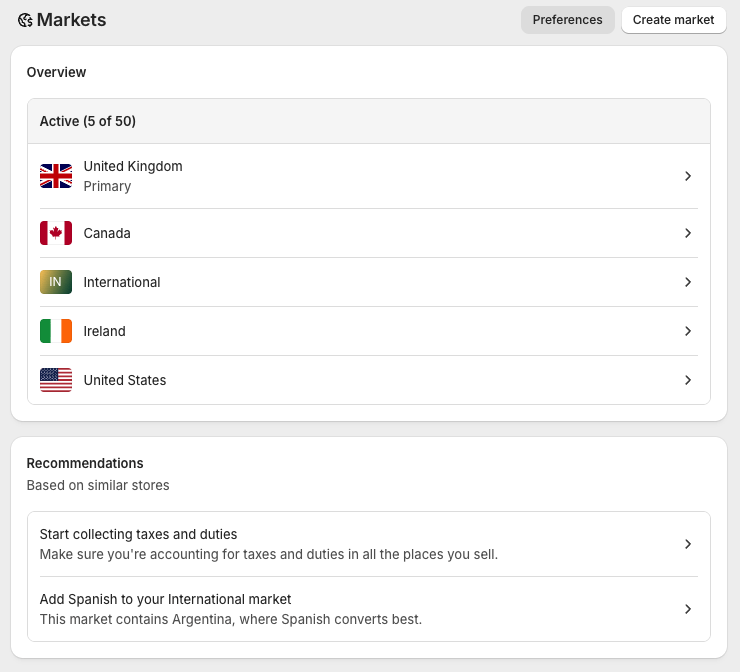
Using Shopify’s Markets feature, you can tailor currencies, languages, pricing, domains, duties and import taxes for different countries—all from a single dashboard. This makes it much easier to create localized shopping experiences for customers around the world.
Wix’s recently introduced multicurrency feature is a welcome addition, allowing eligible stores using Wix Payments, Stripe or PayPal to accept payments in customers’ local currencies. However, its international selling features remain less comprehensive overall, particularly when it comes to managing multiple markets and handling duties and import taxes.
So, if international expansion is a priority, Shopify remains the stronger choice.

2. Shopify’s ecommerce features are much more powerful
Shopify is a dedicated store builder, rather than a general website building tool. So, as you might expect, its ecommerce features are much stronger than the Wix equivalents.
It gives you more ways to set up a dropshipping or print-on-demand business; its automatic tax calculation features are more sophisticated than Wix’s; and it gives you access to a more powerful point-of-sale system.

3. Shopify templates are responsive
With responsive templates, your website’s layout automatically adjusts itself to suit the device it’s being viewed on — mobile, tablet, or desktop computer.

All Shopify templates are fully responsive.
Wix now offers responsive templates too, but only for sites built with its newer Harmony editor. Websites created with the classic Wix Editor still require separate desktop and mobile layouts, meaning extra work to keep both versions looking right.
And significantly, responsive design is preferred by Google — building fully responsive websites can lead to better performance in search results.
Another thing worth noting about Wix and Shopify’s templates is that unlike Wix, Shopify lets you change your templates really easily — in just a couple of clicks, in fact.
Switching templates isn’t possible in Wix, however — if you want to apply a new one to your site, you’ll have to completely rebuild it.

4. Shopify lets you sell on other sites
While both Wix and Shopify let you sell products on your own site, Shopify lets you sell on other sites too. This is thanks to its ‘buy button’ feature that lets you embed products and catalogs on other websites.
There’s no equivalent feature available from Wix.

5. Shopify’s app ecosystem is much bigger
Shopify gives you access to a much wider range of apps and integrations than Wix — there are over 21,000 apps available for Shopify, but just 1,980 for Wix.
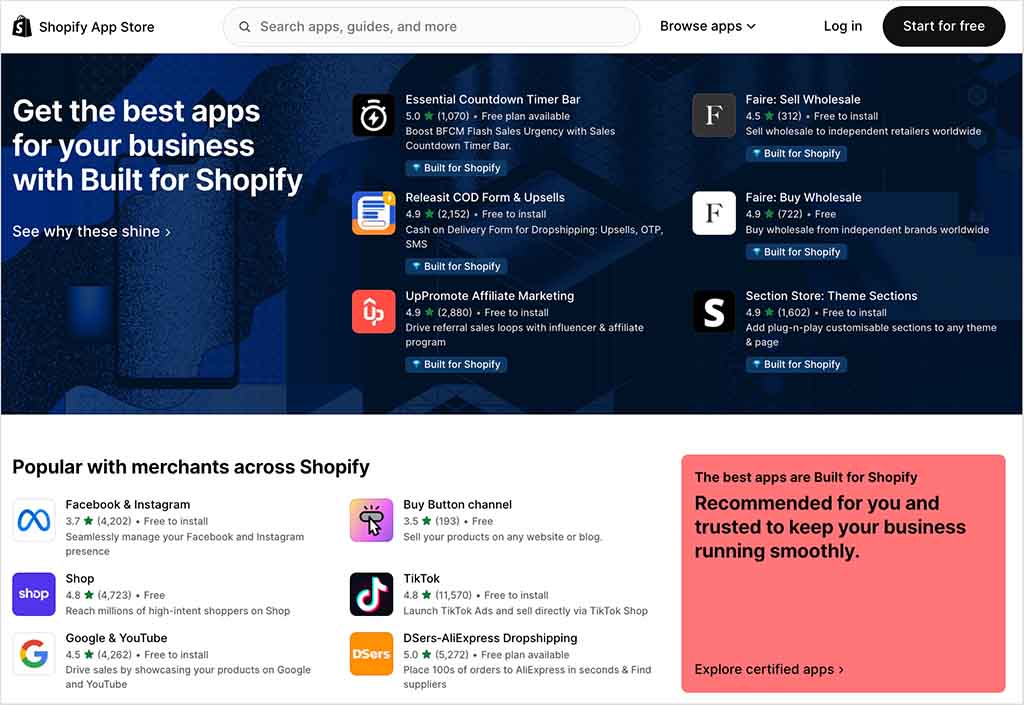
This larger app selection lets you extend a Shopify store’s functionality in ways that are simply not possible with Wix.

Wix vs Shopify: the verdict
So that’s our take on the key areas where Wix and Shopify beat each other. So which platform is better?
Ultimately, if you’re serious about ecommerce, Shopify wins hands down. Its international selling, dropshipping and point-of-sale features are all much stronger than the Wix equivalents, and its huge app ecosystem lets you extend your store’s functionality in ways that are simply not possible in Wix.
If you want to create an attractive content site and do some simple selling on the side, Wix can work — its template range is larger and it does give you more flexibility over site design.
But if you’re building an online store, Shopify is definitely the more powerful and professional choice.
Of course, a great way to discover which platform is the right one for you is to try them out — so a quick reminder that you’ll find links to a forever free Wix plan and a special three-month Shopify trial below:
And finally, if you have any questions about Wix or Shopify, do leave them in the comments. We read them all and will do our best to help.
Wix vs Shopify summary
Reasons to use Wix
Reasons to use Shopify
More templates
Much better for international selling
More flexible site editor
Considerably stronger ecommerce tools
No transaction fees
All templates are fully responsive
Supports more languages
Lets you sell on other sites
Offers phone support
Much bigger app ecosystem
Related resources:


Chris Singleton is the Founder and Director of Ecommercetrix.
Since graduating from Trinity College Dublin in 1999, Chris has advised many businesses on how to grow their operations via a strong online presence, and now he shares his experience and expertise through his articles on the Ecommercetrix website.
Chris started his career as a data analyst for Irish marketing company Precision Marketing Information; since then he has worked on digital projects for a wide range of well-known organizations including Cancer Research UK, Hackney Council, Data Ireland, and Prescription PR. He then went on to found the popular business apps review site Style Factory, followed by Ecommercetrix.
He is also the author of a book on SEO for beginners, Super Simple SEO.