

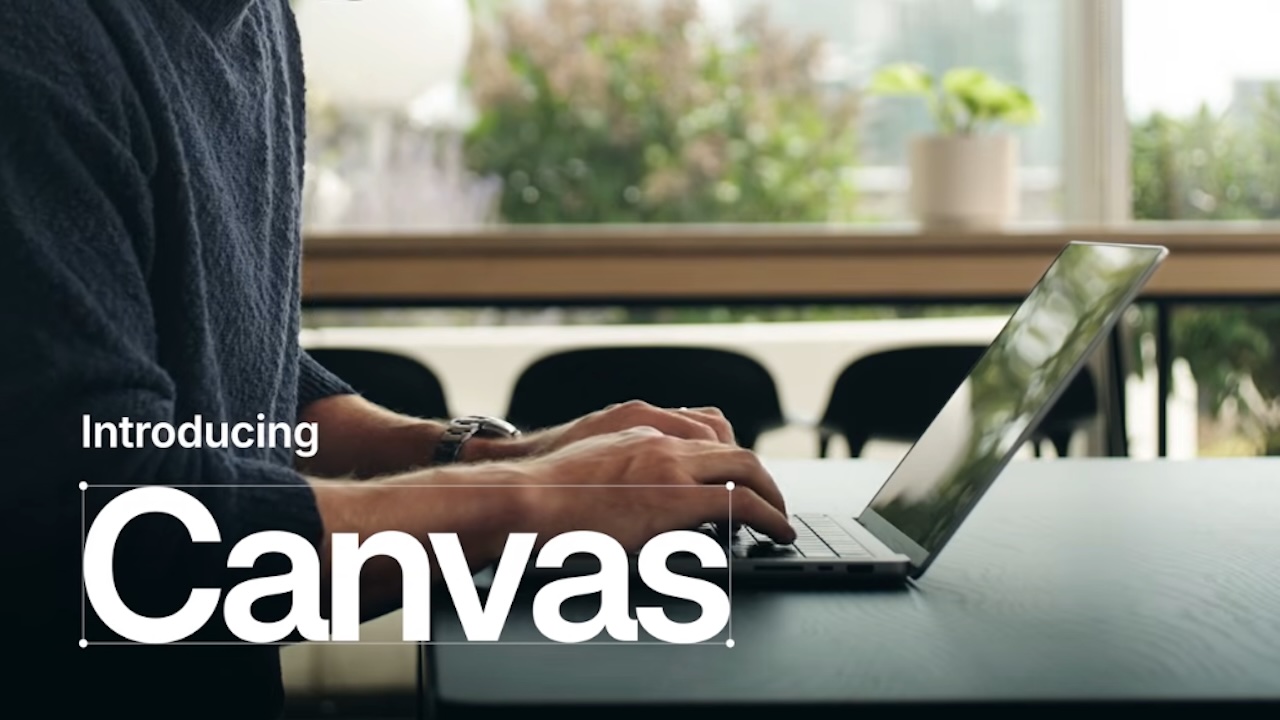
Shopify has unveiled Canvas, a new AI-powered design tool that lets merchants create and customize online store themes using natural language instructions.
Canvas combines a visual editing workspace with Shopify’s Sidekick AI assistant. The aim is to make it significantly easier for merchants to create distinctive storefront designs without coding.
How Canvas works
Unlike Shopify’s traditional theme editor, which generally involves editing individual page templates — home page, product page, collection pages, and so on — Canvas displays a store’s templates together in a single visual workspace.
Merchants can move between pages, zoom into individual elements, and see how their designs work across different parts of their storefront. They can also use Sidekick to make changes simply by describing what they want to see.
For example — as you can see in the video demonstration below — a merchant could ask Sidekick to create a more minimalist homepage, redesign a product page, or change the overall look of their store’s theme.

Sidekick then generates the necessary code and displays the results directly in Canvas, allowing the merchant to review the changes and request further adjustments. Designs can be tested across different products, collections, and screen sizes.
What are the benefits of using Canvas?
The main attraction of Canvas is the way it can significantly reduce the technical work involved in designing a custom Shopify storefront.
Historically, merchants looking to move beyond the standard design options provided by Shopify themes have often needed to edit code, install third-party page builders, or hire developers.
But Canvas can make more distinctive designs accessible to merchants without technical expertise.
It can also make experimentation easier. Instead of spending considerable time manually adjusting theme settings, merchants can ask Sidekick to generate alternative layouts, try different visual approaches, and refine designs through a conversation.
It’s worth noting, however, that Canvas doesn’t force merchants to rely entirely on AI. They can still make direct edits to supported design elements.
And because merchants can experiment with copies of their themes, they can explore new designs without immediately changing the storefront their customers see.
Canvas limitations to be aware of
Despite its potential, Canvas isn’t yet a complete replacement for Shopify’s existing theme editor.
One of its biggest restrictions is its limited compatibility with themes. Canvas supports Shopify-developed themes and those built from scratch — but not third-party themes (of which there are many in the Shopify theme store).

There are also restrictions involving Shopify apps. Canvas doesn’t currently support adding or configuring app blocks and app embeds, which could complicate design changes for stores that rely on these features for reviews, product recommendations, or other storefront functionality.
International selling presents another limitation. Merchants can’t currently use Canvas to customize themes for different Shopify Markets, and theme content can’t be translated directly within the editor. Shopify does, however, support translation through its separate Translate & Adapt app.
There are some important technical considerations, too. Themes edited in Canvas don’t receive theme updates, and can’t currently be downloaded as files.
Canvas also has restrictions around Shopify’s theme rollout features, and some editing tasks, such as adding new blocks, must be performed through Sidekick rather than manually.
Another consideration is that themes created or edited in Canvas can only be opened in Canvas, rather than Shopify’s standard theme editor. Merchants should therefore be aware that adopting Canvas changes how they’ll be able to maintain and customize those themes going forward.
Finally, availability remains limited. Canvas is currently only available via early access to selected merchants, works only on desktop devices, and requires a Shopify plan that supports theme customization.
Why this matters to ecommerce merchants
Shopify Canvas could make it significantly easier and cheaper for merchants to create and customize online store themes without coding skills or developer support. The option to generate layouts, experiment with designs, and make changes using simple AI prompts could be particularly valuable for smaller businesses with limited budgets.
However, not every merchant really needs a custom theme. For many, a professional-looking, ready-made theme that works well out of the box will remain the simpler, safer option. And Canvas’ current restrictions around theme compatibility, app integrations, international selling, and theme maintenance mean it won’t suit every business.
Nevertheless, Canvas marks an important evolution in Shopify’s approach to store design. While it doesn’t yet eliminate the need for traditional themes or professional developers, it gives merchants a powerful new way to create distinctive storefronts with considerably less technical expertise.
Get ecommerce news you can use
Sign up below and we’ll send you email digests of all the latest news and developments in the world of ecommerce, tips on how to grow an online business, and special offers.

Chris Singleton is the Founder and Director of Ecommercetrix.
Since graduating from Trinity College Dublin in 1999, Chris has advised many businesses on how to grow their operations via a strong online presence, and now he shares his experience and expertise through his articles on the Ecommercetrix website.
Chris started his career as a data analyst for Irish marketing company Precision Marketing Information; since then he has worked on digital projects for a wide range of well-known organizations including Cancer Research UK, Hackney Council, Data Ireland, and Prescription PR. He then went on to found the popular business apps review site Style Factory, followed by Ecommercetrix.
He is also the author of a book on SEO for beginners, Super Simple SEO.