

Shopify and Amazon are the two biggest players in the ecommerce world. But which platform is better for building your ecommerce business?
In this Shopify vs Amazon comparison, I’m going to spell out the key pros and cons of using these platforms to sell online. I’ll also show you why deciding between Shopify and Amazon is in many ways a false choice — and how a hybrid setup involving both platforms can actually generate the most revenue.
Quick verdict
Shopify is the better choice if you want to build a standalone online store — one that gives you absolute control over your brand, store design, customer relationships and marketing. And thanks to its very strong point-of-sale features, it’s also a much better choice for merchants who need to sell in person.
Amazon, by contrast, is better for getting your products in front of a huge, existing audience — and without having to worry about any web design tasks. It also beats Shopify for ‘buyer comfort’ — because shoppers are so used to the platform, they may have more confidence in buying from Amazon than from a standalone store.
For most sellers, however, the best strategy is to use both platforms together: use Shopify to build your brand, and Amazon to scale your reach and revenue.
I’ll start my full comparison with a look at the key difference between the two platforms.
The key difference between Shopify and Amazon
Although both Shopify and Amazon let you put your products in front of a large audience, they are very different platforms.
Shopify is a service that lets you build your own online store.
But Amazon actually IS an online store — a huge one in fact, with billions of products on sale to over 300 million customers worldwide.
When you sell on Shopify, it’s like renting a space in which you set up your own shop. With Amazon, it’s more like selling goods in an enormous supermarket.
With Shopify, you’ll have more work to do to set things up exactly the way you want — and find customers to sell your products to.
However, you’ll have far more control over everything. Shopify lets you decide exactly how your brand is presented; what your store looks like; how you capture data; and the way you sell your goods.
With Amazon, the customer base is already there — but so are all your competitors.
Now, both these approaches to selling come with advantages and disadvantages, and in what follows, I’ll explore these in depth.
I’ll start with the key reasons to use Shopify over Amazon, and then highlight the areas where Amazon wins.

Key reasons to use Shopify over Amazon
1. Shopify is better for merchants who need a branded, standalone store.
When you sell on Amazon, you are fairly limited in terms of how you can present your business online. Although a few basic customizations are possible, in general your storefront is going to look very much like an Amazon web page — you won’t be able to create a particularly “bespoke” shopping experience.
Shopify, by contrast, gives you extensive control over your branding and user experience. A large range of customizable web design themes is available — and you can apply your brand easily to any of these.
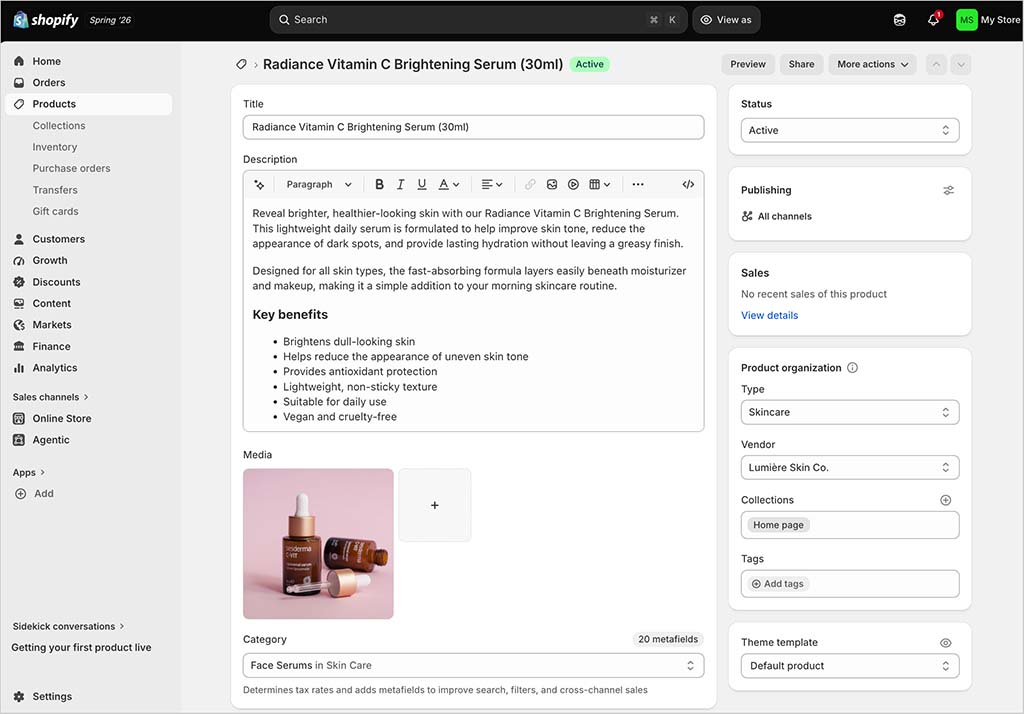
Sophisticated multi-currency and multilingual features in Shopify allow you to further customize the user experience. In short, Shopify lets you make your store completely your own.
2. Shopify gives you ownership of your customer data
When you sell with Shopify, you get access to your customers’ email addresses, and you can encourage store visitors to join email lists. How you communicate with your audience is entirely up to you.
But Amazon places strict limits on the data you receive. You don’t gain access to customers’ email addresses, and any communication you engage in with shoppers must go through Amazon’s own messaging system.
Ultimately, as an Amazon merchant, you don’t own your relationship with your customers.
3. Shopify is better for point-of-sale applications
Point-of-sale features let you sell goods not just online, but in physical locations too, like retail outlets, market stalls, or pop-up shops.
Shopify is a market leader when it comes to point of sale, giving you the hardware and software to make selling in the real world easy.
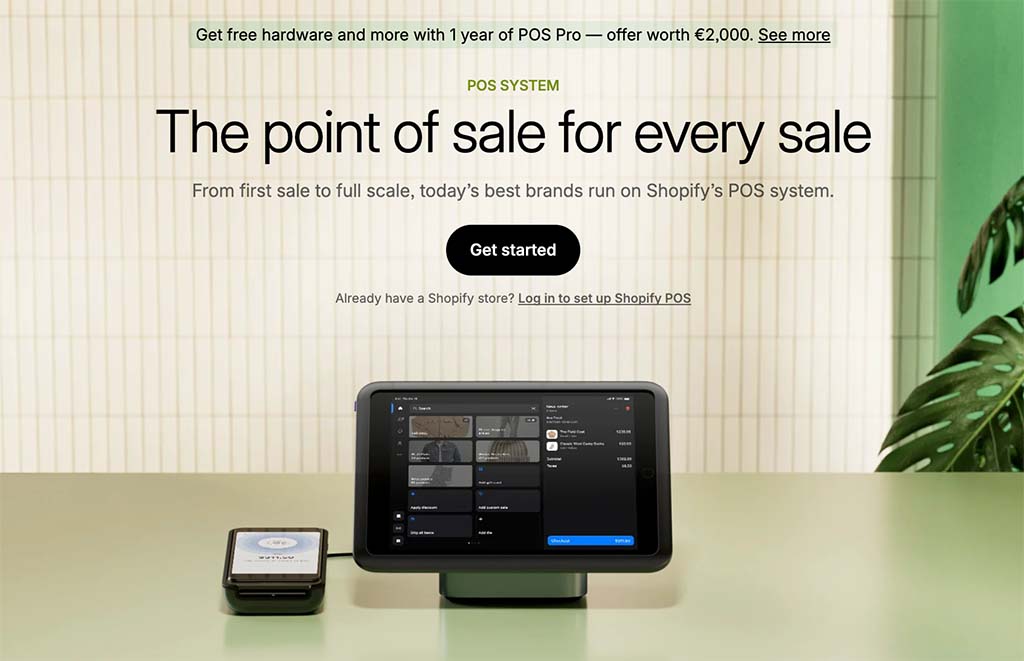
Although you can technically use Amazon for in-person sales, it’s not really designed for this purpose — various workarounds and third-party integrations are required to sell at point of sale. Shopify’s POS features are considerably more extensive and much more ‘baked in’ to the platform.

4. Shopify is better for dropshipping
Dropshipping is a way of selling goods where you don’t buy, make, store or fulfill any products. You just take orders via your online store, send them to a supplier, and they deliver the goods to your customers.
Although you can technically dropship with either Shopify or Amazon, Shopify is a much better solution for this type of online selling. The platform lets you connect your store to a huge number of dropshipping apps and suppliers.
By contrast, Amazon places a lot of restrictions on how you dropship, and the process for doing so isn’t particularly straightforward.

5. Shopify comes with more marketing tools
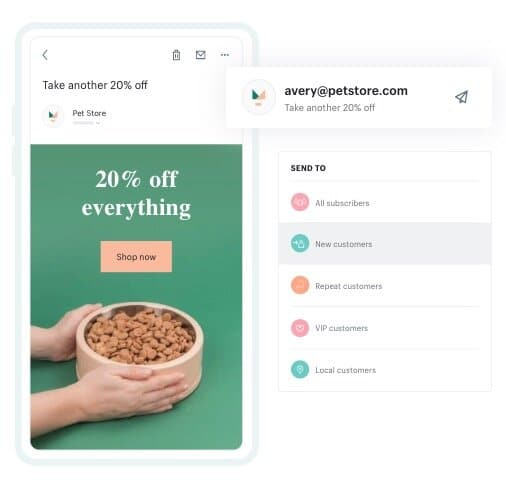
Shopify comes with two key marketing features that you don’t get from Amazon: a blogging tool, and an email marketing system.
A blog is absolutely vital for SEO and inbound marketing — and essential for attracting organic traffic.
Shopify’s generous email marketing feature, which lets you send up to 10,000 newsletters a month for free, lets you capture email addresses and spread the word about your products easily.
Additionally, there are thousands of apps that you can install on your Shopify website — many of these let you integrate your store with key marketing tools in ways that are not possible with Amazon.
6. Shopify lets you do business more ethically
Amazon’s approaches to paying tax, working with unions and supporting employee rights have made a lot of people feel uncomfortable about using the platform.
If you share concerns about Amazon’s style of doing business and want to take a more ethical approach to things, using Shopify is one way to do that.
That’s not to say that Shopify is a perfect company — but using it will definitely give you more independence, and more say over ethics.
The best way to try Shopify out
If you’re interested in trying Shopify out — while saving considerable money in the process — the best way to do this is via its 3-month trial. This lets you extend the standard Shopify trial to three months for just $1 per month.
Reasons to use Amazon over Shopify
1. Amazon gives you access to a huge, existing market
If you’re looking for access to a large, existing customer base, Amazon is the clear winner in a Shopify vs Amazon shootout.
Because of its 300-plus million users in over 180 countries, having a storefront on Amazon gives you a shop window to the world.
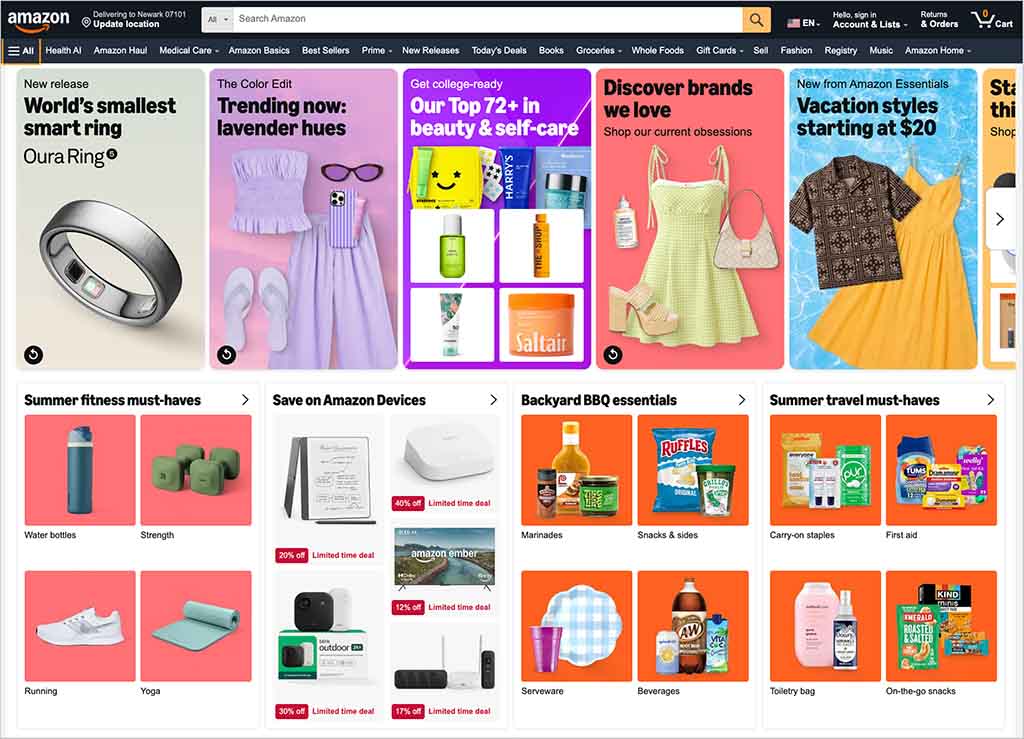
This is the major benefit of using the platform over a store builder like Shopify.
By contrast, when you set up a Shopify store, you are starting entirely from scratch. You’ll need to build your own customer base.
This means putting a lot of work into ecommerce SEO, content marketing, online advertising and PR to ensure that your Shopify store gains visibility and customers.
2. There’s no web design to worry about with Amazon
When you sell on Amazon, it’s a simple case of listing your products on an existing online marketplace.
But with Shopify, you’re building a brand new website. And this means dealing with web design tasks like buying and mapping domains, creating web pages, customizing themes, installing apps and writing search-friendly content.
3. Amazon gives you more SEO opportunities
With Shopify, you’re largely reliant on Google for organic traffic. But Amazon lets you get traffic from Google AND its own massively popular search engine.
This means that technically, an Amazon store presents you with more ‘search audiences’ than a Shopify one, and a larger pool of potential customers.
4. Amazon gives you more product surfacing opportunities
When a customer searches for an item or browses a product page, Amazon’s recommendation engine analyzes their browsing history to suggest products that might appeal to them — and these can include yours.
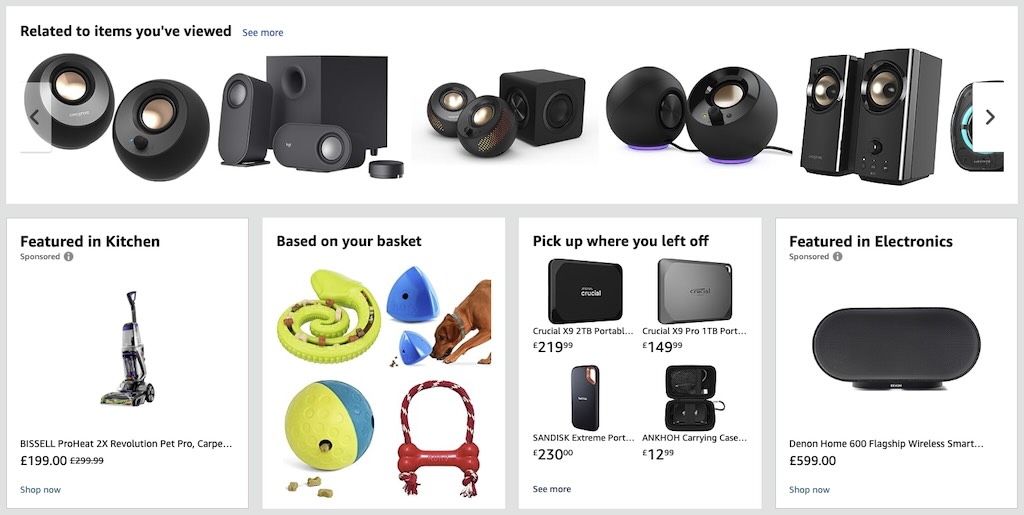
Additionally, Amazon lets sellers pay to promote items directly in search results or on product pages.
Doing this sort of cross-promotion isn’t really possible with a standalone Shopify store.
5. People are comfortable buying on Amazon
One of Amazon’s biggest advantages over independently operated Shopify stores is the huge degree of trust that consumers have in the platform.
For most customers, buying from Amazon feels familiar, safe and straightforward. They already have accounts set up, payment details saved, and a clear understanding of how Prime delivery and returns work (along with confidence in the fact that both are handled very quickly). This removes a huge amount of friction from the purchasing process.
By contrast, when a shopper lands on a new, standalone store you’ve built with Shopify, that trust is very unlikely to exist. Even if your store looks professional, customers may still hesitate to enter payment details and complete purchases.
All of this means that shoppers are typically more likely to complete a purchase on Amazon than on an unfamiliar independent store.
So, those are the main advantages that we think Amazon has over Shopify. I’ll wrap things up with a quick verdict.
Shopify vs Amazon: the verdict
The main advantage of using Shopify over Amazon is the high degree of control you get over your brand and your business. Unlike Amazon, Shopify lets you create a store that looks, feels and works exactly the way you want it to. And it lets you access your customer data and use it however you see fit.
The main advantage that Amazon has over Shopify is the large, ready-made audience it gives you access to — one that is very comfortable with its purchasing and delivery processes, and more likely to complete transactions. Thanks to its own powerful search engine and automatic product recommendation system, Amazon gives you more ways to showcase your products too.
But remember how at the start of the post, I said that the Shopify vs Amazon question represented something of a false choice? Well, this is because you don’t have to use these platforms in a mutually exclusive way.
There are lots of apps available in the Shopify app store that let you sell on both Shopify and Amazon at the same time.
These include the official Shopify-developed ‘Shopify Marketplace Connect’ app, along with other third-party solutions.
You can also use Amazon’s ‘Buy with Prime’ feature on your Shopify store. This lets merchants provide a fast and familiar checkout process, next day delivery and free returns.
Ultimately, by having a presence on both Shopify AND Amazon, you’re giving yourself more ways to generate revenue. Build your brand and mailing list on Shopify, while expanding your reach on Amazon.
Try Amazon and Shopify out yourself
Reasons to use Shopify
Reasons to use Amazon
Complete brand control: Shopify lets you design a bespoke store that reflects your unique brand identity.
Quick access to global audience: Amazon puts your products in front of 300m+ existing shoppers.
Ownership of customer data: the platform lets you collect emails and build long-term relationships.
Buyer trust: shoppers already trust Amazon’s checkout, shopping and returns systems.
Superior marketing tools: you get built-in blogging features and free email marketing tools.
Dual search visibility: your products can appear in both Google and Amazon search results.
Market-leading POS: Shopify gives you professional hardware and software for in-person selling.
No web design needed: no need to buy domains, design pages, or maintain a site.
Optimized for dropshipping: it lets you connect to hundreds of global suppliers.
Automated product surfacing: Amazon can recommend your products to relevant buyers.
Ethical independence: you get more control over your business values.
Lower purchase friction: one-click buying with saved payment and shipping details.
Shopify vs Amazon FAQs
What is the main difference between Shopify and Amazon?
The main difference is that Shopify is a platform for building your own online store, while Amazon is an existing marketplace where you list products alongside those from other sellers. Shopify gives you full control over your branding, store design and customer relationships, but Amazon provides quick access to a large, established audience.
Is Shopify better than Amazon for beginners?
Amazon is often easier for beginners, because you don’t need to build a website to use it — you start selling simply by listing products. However, the Shopify learning curve may be worth overcoming, because it gives you more control over your brand, marketing and customer data.
Can I use Shopify and Amazon together?
Yes — and in most cases, this is the best approach. You can use Shopify to build your brand and collect customer data, while using Amazon to reach a wider audience and drive more sales. Dedicated apps (available in the Shopify app store) make it easy to work with both platforms at the same time.
Which is better for SEO, Shopify or Amazon?
Amazon can provide quicker visibility because your products can appear in its own search results as well as on Google. Shopify arguably wins, however, when it comes to long-term SEO. This is because it gives you more granular control over key SEO elements — like page titles, meta descriptions and URLs — along with access to a blogging tool that can be used to generate organic traffic not just to your products, but to content relating to your overall niche.

Chris Singleton is the Founder and Director of Ecommercetrix.
Since graduating from Trinity College Dublin in 1999, Chris has advised many businesses on how to grow their operations via a strong online presence, and now he shares his experience and expertise through his articles on the Ecommercetrix website.
Chris started his career as a data analyst for Irish marketing company Precision Marketing Information; since then he has worked on digital projects for a wide range of well-known organizations including Cancer Research UK, Hackney Council, Data Ireland, and Prescription PR. He then went on to found the popular business apps review site Style Factory, followed by Ecommercetrix.
He is also the author of a book on SEO for beginners, Super Simple SEO.