

If you’re thinking about setting up a print-on-demand business, you’ve probably encountered the words “Printify” and “Shopify” quite a lot. Both platforms are key players in the world of ecommerce and print on demand. But which one is better for your needs?
Well, in this short post, I’m going to help you answer that question — and show you how to get the best results from both platforms.
The quick answer
If you’re trying out print-on-demand selling and need a quick, free way to design and showcase products, Printify gives you a free and simple option for doing so in the form of its “Pop-Up Store” feature.
But if you’re serious about building a professional, scalable ecommerce store, Shopify is the better choice — unlike Printify, it gives you full control over design, SEO, and marketing (and code if you want it!).
In many cases, however, the smartest move is to use both tools together, combining Printify’s excellent product creation functionality with Shopify’s powerful store-building tools.

OK, let’s start with a look at the key difference between Printify and Shopify.
The key difference between Printify and Shopify
The key difference between Printify and Shopify is that Printify’s main focus is on letting you design print-on-demand products — items that are then made and fulfilled by a print supplier. These include things like clothing, wall art, homeware and accessories.
Shopify, on the other hand, is a tool that is primarily used to build online stores. And you can use a Shopify store to sell any type of products — for example things you made yourself, digital goods, or items that are manufactured and fulfilled by a service like Printify.
However, there is a significant crossover between the two tools, for the simple reason that Printify ALSO lets you build an online store. This is done using its ‘Pop-Up Store’ feature.
Let’s take a look at this now, and see how it compares to Shopify’s store-building capabilities.
Printify’s Pop-Up Store feature
Printify’s ‘Pop-Up Store’ feature is a very simple store builder that lets you display and sell print on demand products.
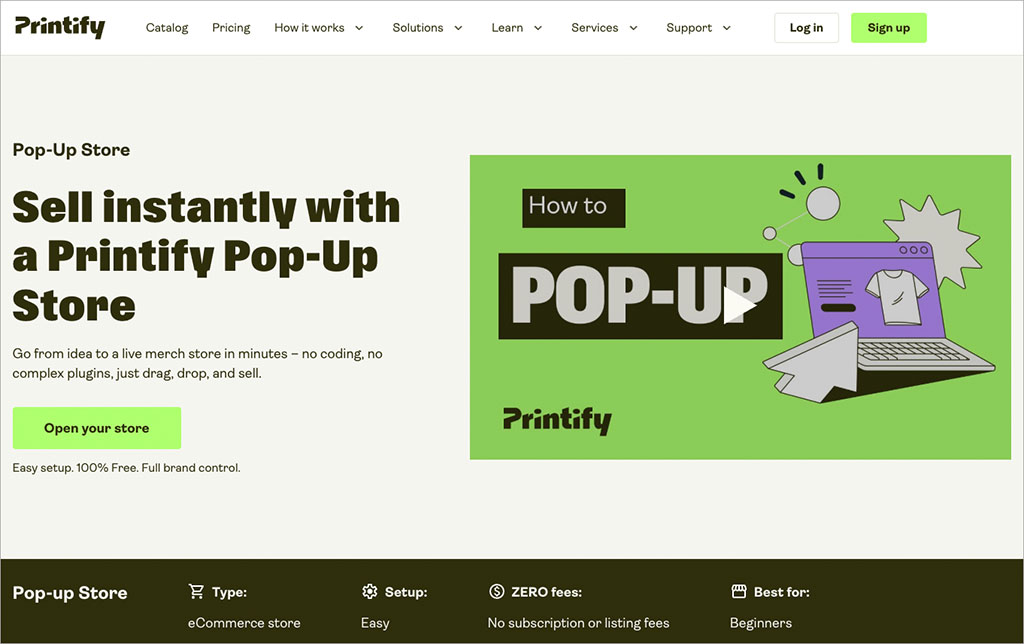
Adding a new product to a Pop-Up Store is extremely easy — once you’ve designed a product in Printify, you just hit a ‘Publish’ button and the product is immediately available for purchase on your online storefront.
However, when it comes to editing your Pop-Up Store’s design and content, the options are limited. You can add your brand logo and social media links to your store, and make basic tweaks to its appearance — but content management options are limited, and there are no blogging features or advanced SEO controls available.
And of course the only thing you can sell on a Printify Pop-Up store is POD inventory that you’ve created with Printify.
So, while a Printify ‘Pop-Up Store’ certainly gives you an easy, “no-frills” way to create a simple website presence for your product designs, its basic editing features and inventory restrictions mean that it’s not really the best store building solution for professional merchants.
Now let’s take a look at Shopify.
Shopify’s feature set
Shopify is one of the most powerful online store builders on the market, giving you complete control over every aspect of your business’s online presence.

It gives you access to a wide range of customizable themes, a drag-and-drop editor, a blog, SEO tools, and powerful international selling features. It also lets you work with a huge range of payment processing providers.
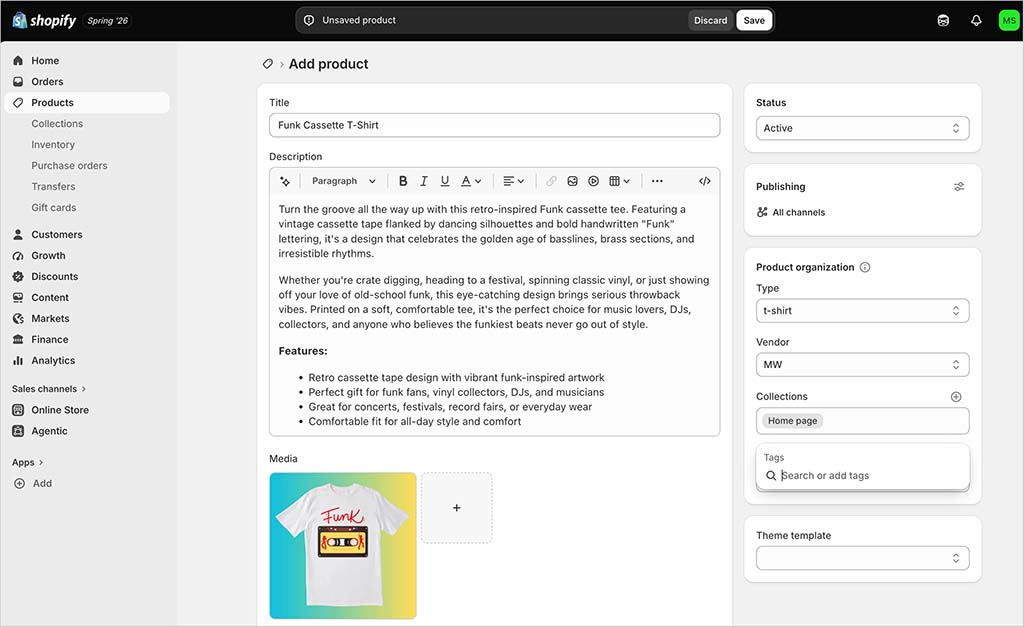
In short, everything you need to create a professional online store comes “out of the box” from Shopify.
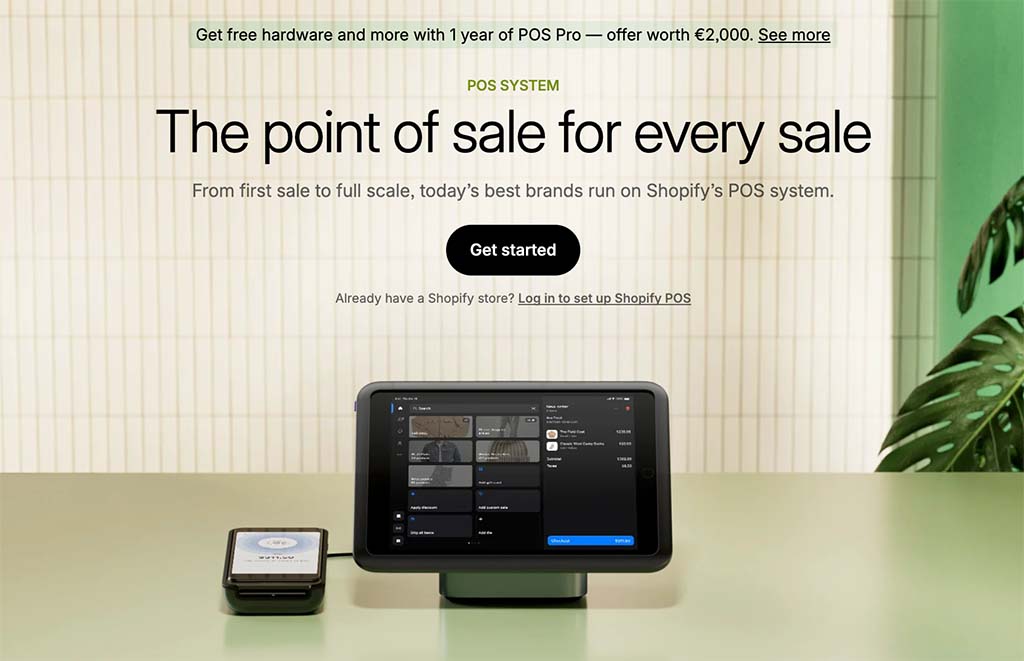
It also gives you access to a huge range of apps and integrations that let you extend your store’s functionality in lots of different ways. For example, you can use Shopify apps to create sophisticated email marketing campaigns; sell products on Amazon; sell products in person (via point-of-sale hardware); and dropship. None of this is possible with a Printify Pop-Up Store.
Related resource
So which platform is right for you?
Well, even though Shopify is the more powerful platform, there are definitely a couple of scenarios where you might want to use Printify by itself.
The first is if you are on an extremely low budget and know that you are only ever going to be selling POD items. Printify’s Pop-Up Store tool lets you create a simple storefront entirely for free, while giving you full access to its enormous catalog of POD products.
The second scenario is where you simply need to point friends and family to a site where they can purchase POD items that have been designed specially for them. For letting members of a local club buy customized merchandise like shirts or calendars easily, a Printify Pop-Up Store will do the trick nicely, and for free.
But a lot of the time, deciding between Shopify and Printify isn’t really an “either/or” situation. In most cases, you’ll get much better results by using the two platforms together.
Yes, Shopify’s store builder is light years ahead of Printify’s Pop-Up Store feature in terms of capabilities — and will give you a much more professional store. But Printify gives you all the inventory you’ll need to populate that store with great products.
And the good news is that it’s really easy to use Printify and Shopify together. All you need to do is create a Shopify account, install the Printify app, design some products and sync them to your Shopify store.
The other big advantage of connecting Printify and Shopify is flexibility. Instead of being limited to listing print-on-demand products on your store, you can sell them alongside anything else — for example, your own handmade goods, digital products or dropshipped inventory. This makes it much easier to build a diversified store.
Yes, a Shopify account will cost you considerably more than a Printify Pop-Up store — but it’s worth remembering that some of the features Shopify provides can often cover the cost of your subscription. Used effectively, its abandoned cart recovery tools can be used to recover 20% of abandoned purchases, and its free email marketing system can be used to avoid the cost of a standalone email marketing solution while generating extra product sales.
And finally, it’s worth noting that many sellers eventually outgrow Printify’s Pop-Up Store. While it’s great for getting started with POD, its limited design and marketing features mean that many users end up switching to Shopify later on — often having to rebuild their store in the process. For that reason, if you’re serious about growing a brand, it can make sense to start with a hybrid Printify-Shopify setup from the very outset.
Try both platforms out
If you’re interested in using Shopify or Printify (or both!) you’ll find links below to an extended Shopify trial and the sign-up page for a free Printify account.
Shopify vs Printify — at-a-glance comparison
| Feature | Printify Pop-Up Store | Shopify + Printify |
| Setup cost | $0 | From $39/mo for full version |
| SEO tools | Limited / Basic | Advanced |
| Sales channels | Online Store Only | Facebook, Instagram, Amazon, POS and more |
| Email marketing features | No | Yes, via the free Shopify Messaging app |
| Best for | Hobbyists, social groups | Professional merchants |
FAQs about Shopify and Printify
1. What is the main difference between Printify and Shopify?
Printify is a print-on-demand platform that lets you design and sell custom products, while Shopify is a full ecommerce platform used to build and manage online stores selling any type of product.
2. Can I use Printify without Shopify?
Yes, you can use Printify on its own by using its “Pop-Up Store” feature. This gives you a simple, free way to sell print-on-demand products, but it comes with limited customization, marketing, and SEO features.
3. Is Shopify better than Printify for beginners?
It depends on your goals. Printify is easier to use and free to start with, making it ideal for beginners testing ideas. Shopify has a steeper learning curve and a monthly cost, but it offers far more tools for building a professional, scalable online business.
4. Should I use Printify and Shopify together?
In many cases, yes. Combining Printify with Shopify lets you design products using Printify while taking advantage of Shopify’s powerful store-building, marketing, and sales features — giving you the best of both platforms.

Chris Singleton is the Founder and Director of Ecommercetrix.
Since graduating from Trinity College Dublin in 1999, Chris has advised many businesses on how to grow their operations via a strong online presence, and now he shares his experience and expertise through his articles on the Ecommercetrix website.
Chris started his career as a data analyst for Irish marketing company Precision Marketing Information; since then he has worked on digital projects for a wide range of well-known organizations including Cancer Research UK, Hackney Council, Data Ireland, and Prescription PR. He then went on to found the popular business apps review site Style Factory, followed by Ecommercetrix.
He is also the author of a book on SEO for beginners, Super Simple SEO.