

Shopify or GoDaddy — which is better for building an online store? In this comparison, I’m going to compare these two platforms in eight key areas and help you choose the right platform for your project.
I’ll also explain why GoDaddy’s biggest advantage can eventually become its biggest limitation.
My quick verdict on Shopify vs GoDaddy
Shopify is the better choice for most online stores. It gives you considerably stronger selling tools, more payment options, better international features, a much larger app ecosystem, and more room to grow.
GoDaddy is easier to use, and it can be a good option for beginners who just need a simple website with basic ecommerce functionality. But that simplicity comes with significant limitations, particularly where dropshipping, international selling, customization, and integrations are concerned.
Choose GoDaddy for simplicity. Choose Shopify if you want to build a serious, scalable ecommerce business.
1. Ease of use
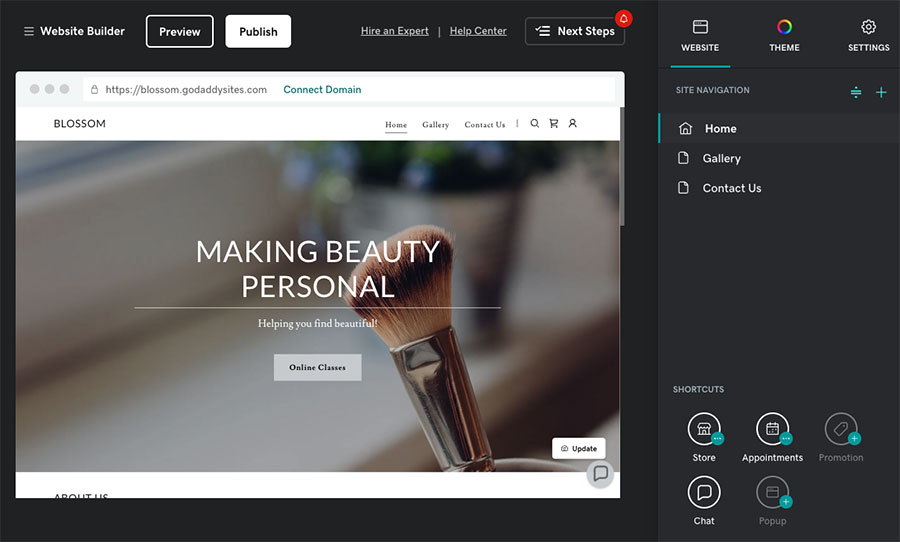
GoDaddy’s interface is the easier of the two to use. It’s clean, intuitive, and lets you edit any page easily using a simple drag-and-drop tool.
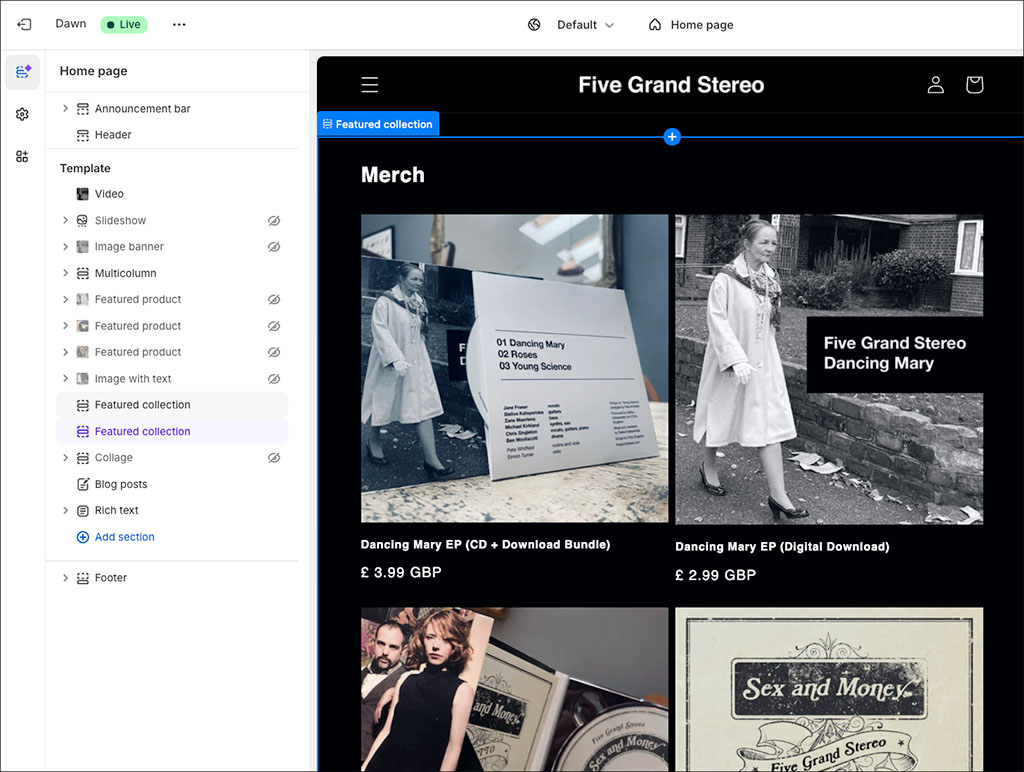
Shopify’s interface is user-friendly too, but its drag-and-drop editor can be a bit confusing. This is because, the home page aside, you use it to design page templates rather than edit content directly.
Ultimately, GoDaddy is a more obvious option for web design novices — but as we’ll see shortly, its simplicity is in part down to a lack of selling functionality.
2. Selling features
This is where Shopify wins hands down. It gives you:
- more flexible product management features;
- abandoned-cart recovery tools that GoDaddy lacks;
- stronger reporting;
- better shipping options;
- more payment processing options;
- a more advanced point-of-sale system for selling in person.
Using some of these features can involve a bit of a learning curve — but it’s worth it, because the functionality provided is excellent.
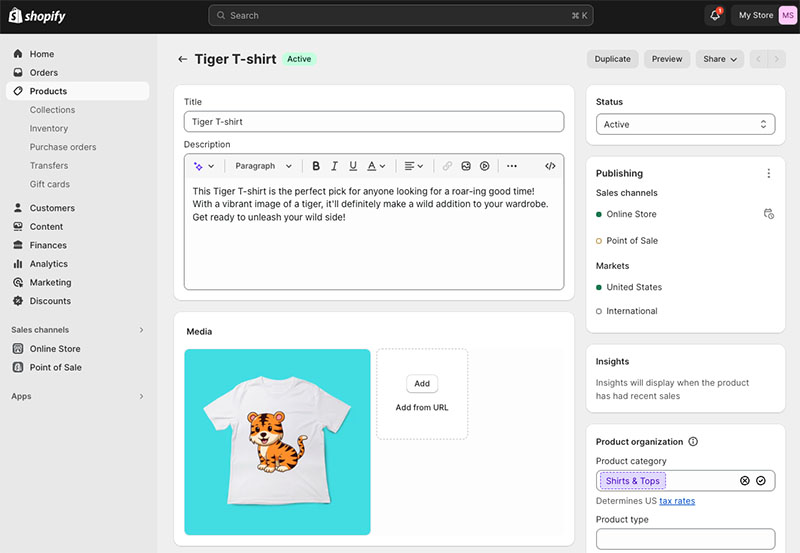
In particular, Shopify is much better for dropshipping. It connects with hundreds of dropshipping suppliers and product-sourcing services, making it easy to import products and automate order fulfillment.
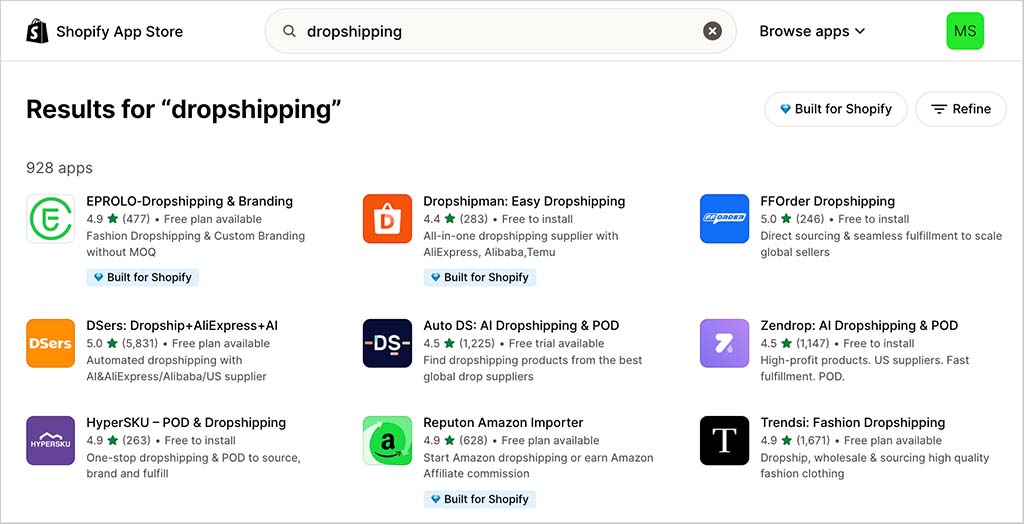
GoDaddy’s website builder doesn’t really support dropshipping at all.
All that said, GoDaddy does have a couple of advantages over its rival here. Unlike Shopify, it lets you sell very large digital files without the need for a separate digital products app and it makes it easier to collect information from customers when selling personalized products.
But overall, Shopify’s selling features are considerably more powerful than GoDaddy’s.

3. Templates and design
GoDaddy gives you access to over 270 templates, and they’re all free. Shopify provides a much smaller selection of free themes — 24, at the time of writing — but a larger collection of paid ones.

Both platforms’ templates are mobile-friendly and professional. But Shopify’s arguably look more polished.
Perhaps more significantly, they give you much more control over the look and feel of your store. With Shopify, you can access more fonts, add a wider range of sections, and edit your theme’s code.
GoDaddy is considerably more restrictive here, but it does give you better built-in image-editing tools.

4. Scaling internationally
International selling functionality is one of the biggest differences between the platforms.
A GoDaddy store can only use one currency, and the platform doesn’t give you professional multilingual selling features.
By contrast, Shopify lets you create localized versions of your store for different countries, display prices in multiple currencies, and translate your content into up to 20 languages. Its international tax tools are more sophisticated too.
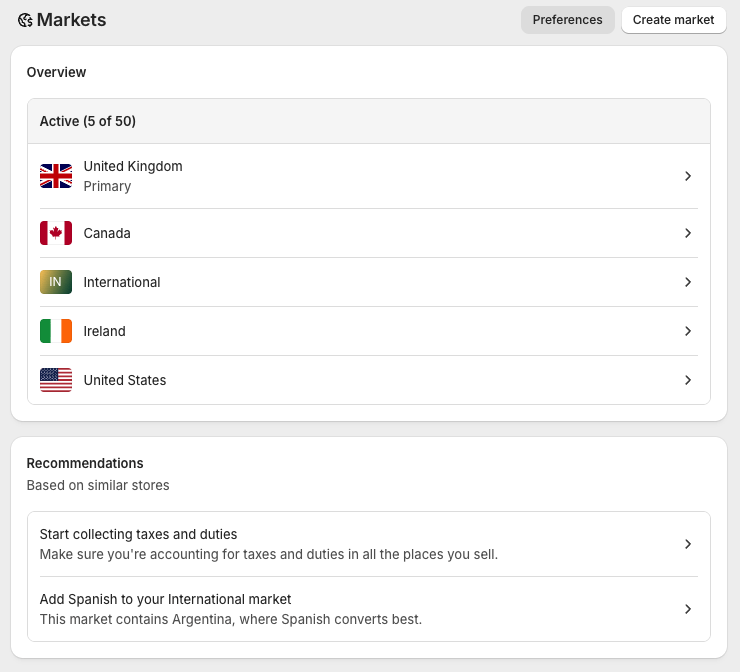
If you only ever plan to sell in one country, GoDaddy may provide everything you need. But if you want to target customers in multiple markets, Shopify is the clear winner.
5. Email marketing
GoDaddy is very generous when it comes to email marketing. Its Commerce plan lets you send up to 100,000 marketing emails per month.
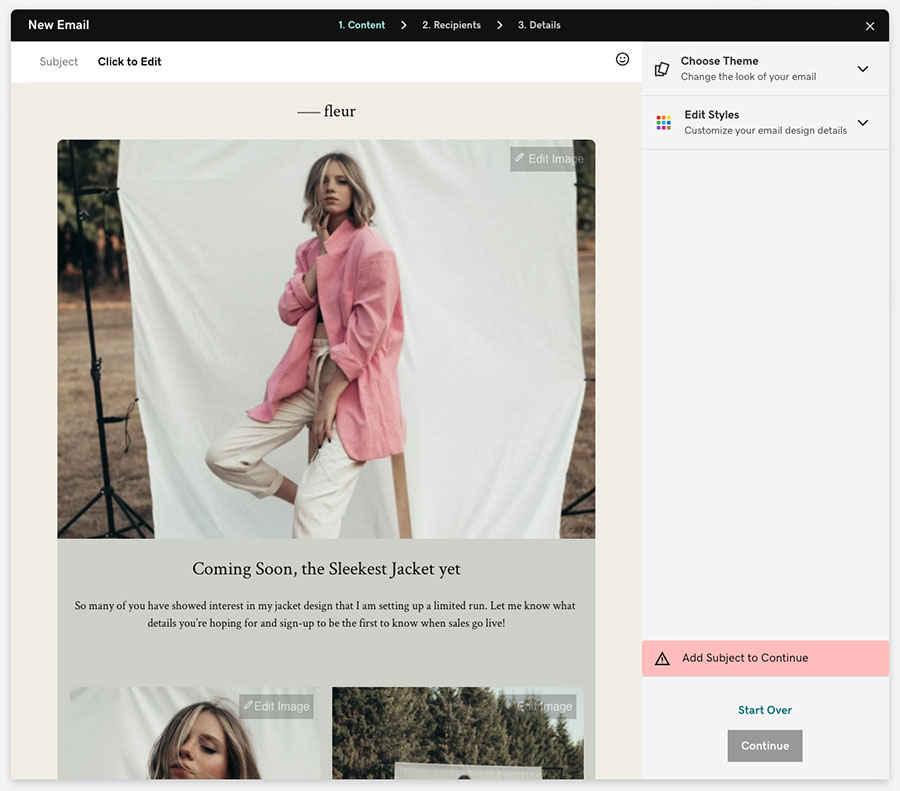
Shopify gives you far fewer free email sends each month — 10,000, via its “Shopify Messaging” app. But Shopify’s email features are arguably more sophisticated, because you can use visitor actions on your store — like purchases, product views, or cart abandonment — to trigger automated email campaigns.
6. Apps and integrations
Shopify’s app store contains around 21,000 apps. These let you connect the platform to accounting tools, email marketing apps, customer-support platforms, dropshipping suppliers, and thousands of other services.
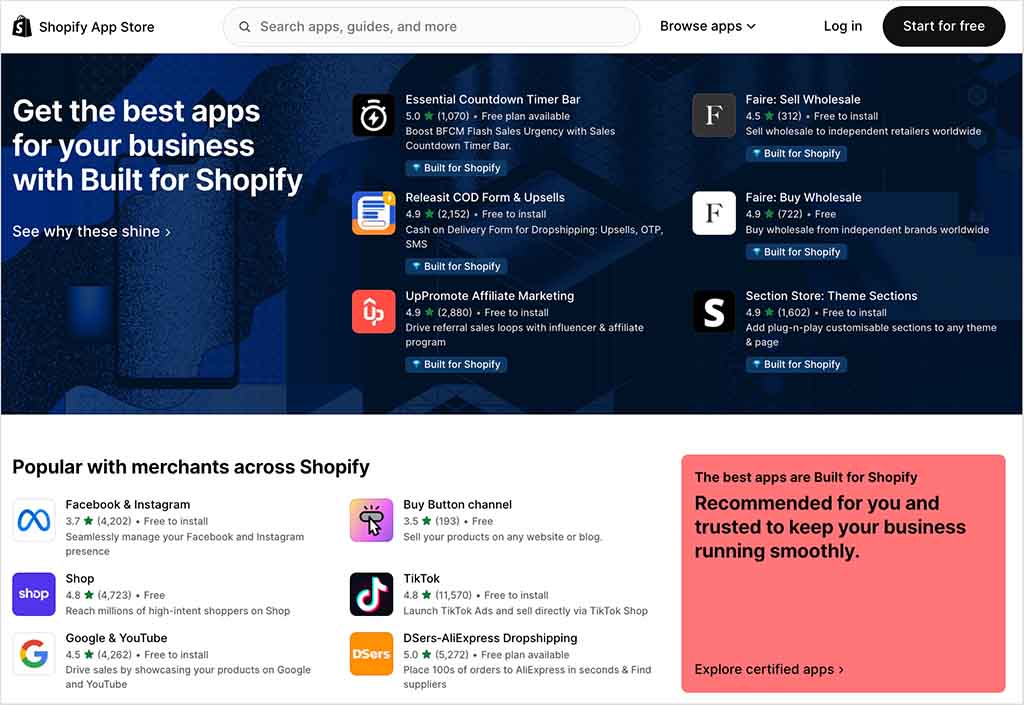
GoDaddy doesn’t provide a comparable app marketplace. And this difference matters because with Shopify, a missing feature isn’t a dead end — you can usually add it through an app. With GoDaddy, you’re much more dependent on the functionality built into the platform.
7. AI features
GoDaddy’s standard website builder uses AI to generate an initial site based on information you provide, and after that, you can use AI to help you with things like copywriting, social posts, design, and basic SEO.
But Shopify offers the more comprehensive set of AI features, especially for ecommerce applications.
Its Shopify Magic tools can generate product descriptions, marketing content, store imagery, and custom theme sections. And its Sidekick AI chatbot can answer questions about your business, analyze your store data, and carry out administrative tasks.
8. Free plans and trials
GoDaddy gives you a free plan that you can use indefinitely.
This is useful if you want to experiment with its website builder before paying for anything. However, the free plan displays GoDaddy advertising prominently and doesn’t let you create a fully functional online store.
Shopify doesn’t offer a permanent free plan. Instead, it gives you a three-day free trial, which you can learn more about here.
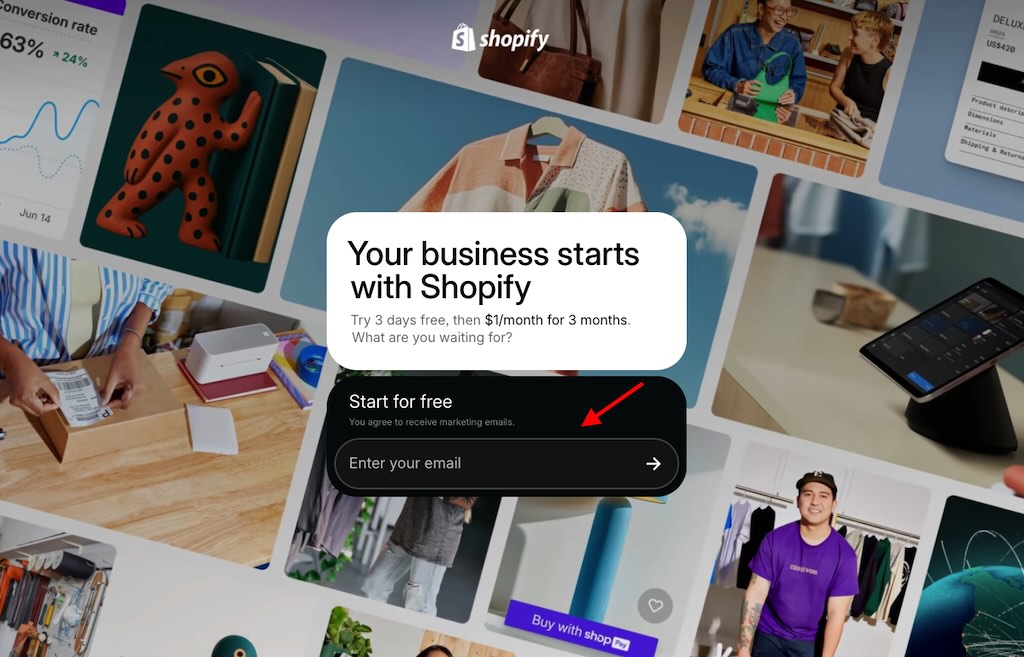
In short, GoDaddy gives you more time to explore its basic website-building tools for free, while Shopify lets you test a complete ecommerce setup at a very low cost.
What do real-world users think of Shopify and GoDaddy?
So far, you’ve heard my take on Shopify vs GoDaddy. But what do real-world users make of the platforms? To find out, I collated data from popular review sites. You’ll find this in the table below.
| Review site | Shopify ratings | GoDaddy ratings |
| Capterra | 4.5/5 (6,701 reviews) | 4.2/5 (1,379 reviews) |
| G2 | 4.4/5 (6,565 reviews) | 4.1/5 (189 reviews) |
| TrustRadius | 8.7/10 (708 reviews) | 7.4/10 (202 reviews) |
| Average user rating (out of 5) | 4.4 | 4.0 |
Shopify vs GoDaddy verdict
Earlier, I said that GoDaddy’s biggest advantage can eventually become its biggest limitation.
That advantage is its simplicity. GoDaddy is easier to learn because it gives you fewer tools and fewer decisions to make. But as your business grows, those same limitations can make it harder to add advanced selling features, expand internationally, or connect your store to other services.
Ultimately, it’s best to think of GoDaddy as a website builder that can also handle simple ecommerce. But Shopify is a dedicated ecommerce platform that supports business growth.
It beats GoDaddy comprehensively when it comes to product management tools, international selling features, dropshipping integrations, app availability, and point-of-sale functionality. All this makes it far more suitable for building a serious online store.
So my overall verdict is this: choose GoDaddy if simplicity matters more to you than ecommerce functionality.
But if you want a professional store that you can scale, choose Shopify.

Chris Singleton is the Founder and Director of Ecommercetrix.
Since graduating from Trinity College Dublin in 1999, Chris has advised many businesses on how to grow their operations via a strong online presence, and now he shares his experience and expertise through his articles on the Ecommercetrix website.
Chris started his career as a data analyst for Irish marketing company Precision Marketing Information; since then he has worked on digital projects for a wide range of well-known organizations including Cancer Research UK, Hackney Council, Data Ireland, and Prescription PR. He then went on to found the popular business apps review site Style Factory, followed by Ecommercetrix.
He is also the author of a book on SEO for beginners, Super Simple SEO.