

Please note: this article contains affiliate links. If you buy through these, we may receive a commission at no extra cost to you. Using our links supports our work.
Moz and Semrush are two of the biggest names in SEO software. And if you run an online store, either platform can help you find better keywords, research competitors, identify technical SEO problems, build links, and track how visible your brand is in AI search.
But they do this to differing extents — and the best choice really comes down to whether you care more about cost or capability.
So in this quick comparison of the two tools, I’ll give you five reasons to use Moz, five reasons to use Semrush, and a quick verdict on which one is likely to suit your ecommerce business best. First up, my quick verdict — and then a deeper dive.
My quick verdict on Moz vs Semrush
The Moz vs Semrush decision largely comes down to your budget and how much SEO functionality you need.
Moz is considerably cheaper than Semrush, and gives you a solid set of tools for keyword research, technical SEO, backlink analysis and AI visibility tracking. If you’re running a small online store, or just need to take care of the SEO basics, there’s a lot to like here.
Semrush, however, is a much more powerful platform. It gives you significantly better keyword research and competitor analysis tools, more sophisticated AI visibility features, and a much wider range of marketing tools generally.
Ultimately, Moz offers a lot of value for money. But if you’re serious about SEO and AI visibility, Semrush is the better overall investment — and its additional capabilities may well justify the higher price.

Let’s start with Moz.
Reasons to use Moz over Semrush
1. Moz is much cheaper
Moz’s Starter plan costs just $49 per month.
But the cheapest Semrush plan combining its core SEO and AI visibility tools costs $199 per month — around four times as much.
Now, Semrush gives you considerably more functionality, so this isn’t an exact like for-like comparison. But if you run a small online store, or SEO is only one part of your marketing activity, Moz gives you a much cheaper way into professional SEO software.
And in some areas, it’s cheaper to scale too. For example, Moz charges around $20 to monitor an additional domain for AI visibility, while Semrush charges $99.
If you run several ecommerce brands, that difference can add up quickly.
2. Moz gives you much more generous crawl limits
Both tools let you crawl your store to find technical SEO problems — things like broken links, missing metadata, duplicate content, and indexing issues. That can be particularly important on ecommerce sites, where hundreds or thousands of product and category pages can create technical SEO headaches.
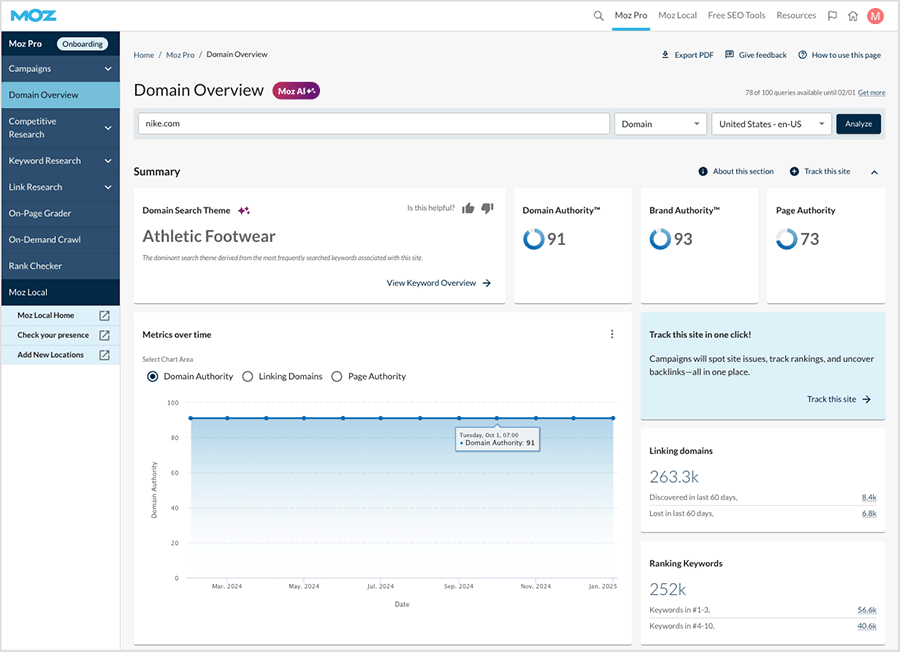
Moz’s $99 Standard plan lets you crawl around 400,000 pages per project each month. But Semrush’s $199 Starter plan limits you to 100,000.
So, if you run a large product catalog, Moz’s crawl allowances can be a significant advantage.

3. Moz can work better for teams
Moz can be a better fit if several people are working on your store’s SEO. Its Medium and Large plans include multiple user seats, and extra users cost $49 per month.
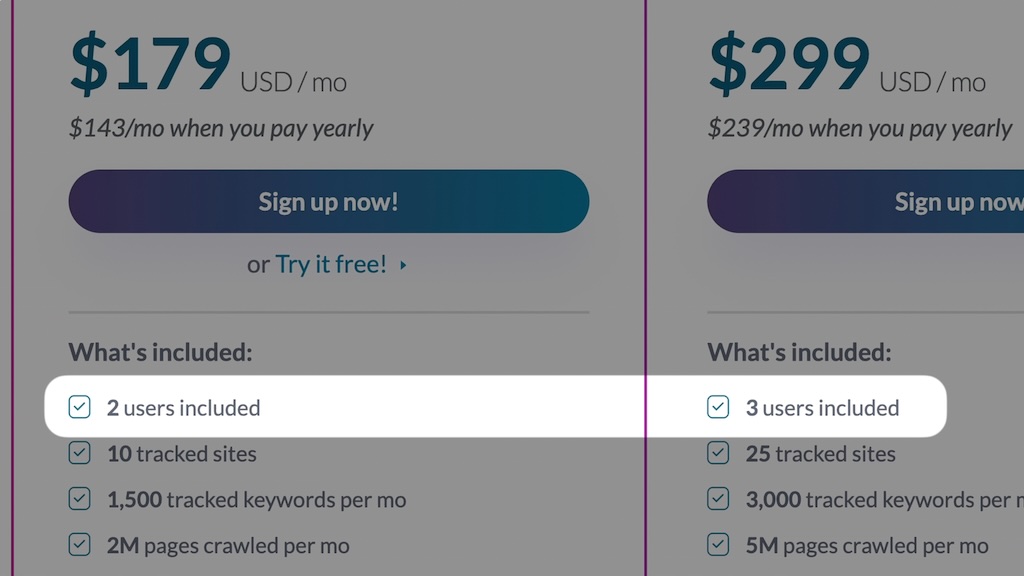
Semrush includes just one user by default, and additional seats can be very expensive.
4. Moz gives you much cheaper API access
An API lets you pull SEO data into your own dashboards, reports, spreadsheets, or applications. And for ecommerce businesses with custom reporting setups, this can be very useful.
Moz API plans start at just $20 per month — but Semrush only gives you access to its API if you’re on its most expensive “Advanced” plan or its enterprise offering.
So if you want to combine SEO data with your own ecommerce reporting without spending a fortune, Moz is the more accessible option.
5. Moz gives you Brand Authority data
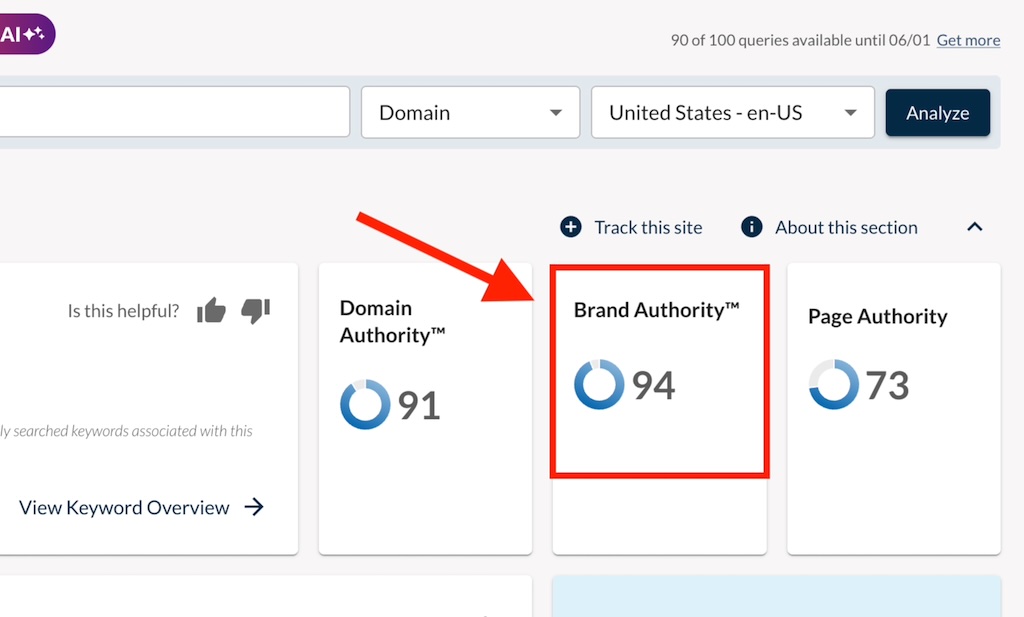
Moz gives you a useful metric that Semrush doesn’t: Brand Authority. This gives you an indication of how established and recognizable the brand behind a website is.
That can be especially useful when you’re researching competing stores. Two ecommerce sites can have similar backlink profiles and target similar keywords — but if one has a much stronger brand, that can help explain why it performs better in search.
OK — so those are the key reasons you might want to use Moz over Semrush. If you’d like to try it out, there’s a free trial of the platform available here.
Now let’s take a look at the reasons for using Semrush over Moz.
Reasons to use Semrush over Moz
1. Semrush is much better for keyword research
Semrush’s keyword database contains around 28.9 billion keywords, compared with around 1.25 billion in Moz. It also gives you access to far more keyword suggestions — while Moz limits you to just 1,000, Semrush’s entry-level plan starts with a 10,000 limit.
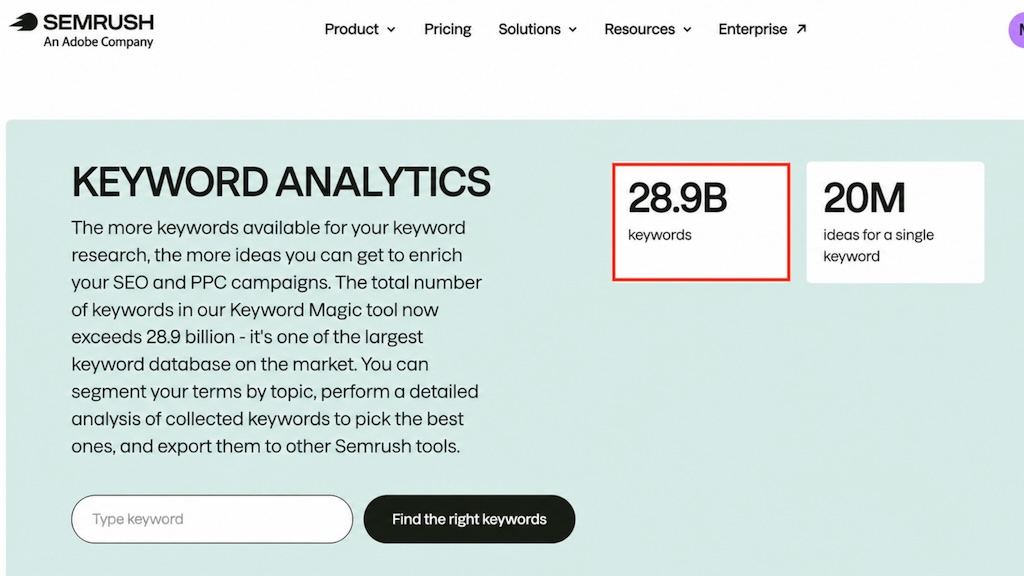
That gives ecommerce merchants much more scope to uncover product keywords, category terms, comparison searches, and long-tail buying queries.
Semrush also provides extra metrics that you won’t find in Moz, including personalized keyword difficulty scores and estimates of how many referring domains you may need to rank for a keyword.
2. Semrush gives you much better competitor research data
Semrush lets you investigate a competitor store’s rankings, backlinks, estimated organic traffic, paid-search activity, search intent, and AI visibility.
Moz gives you useful competitor data too, but it doesn’t remotely match Semrush for traffic estimates or PPC intelligence.
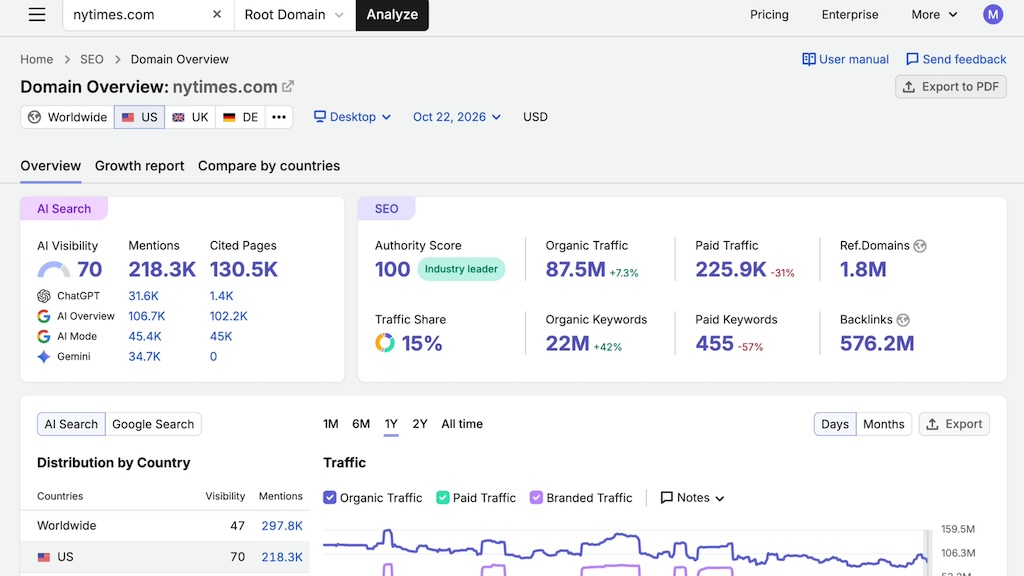
So if you want to understand not just where a competing store ranks, but how it is attracting traffic across organic search, paid search, links, and AI platforms, Semrush gives you a much fuller picture.

3. Semrush gives you better link-building tools
Both platforms give you access to extensive backlink data.
But Semrush is better at turning that data into an actual link-building campaign.
It lets you find prospects, evaluate them, message them and track outreach — all within the platform itself.
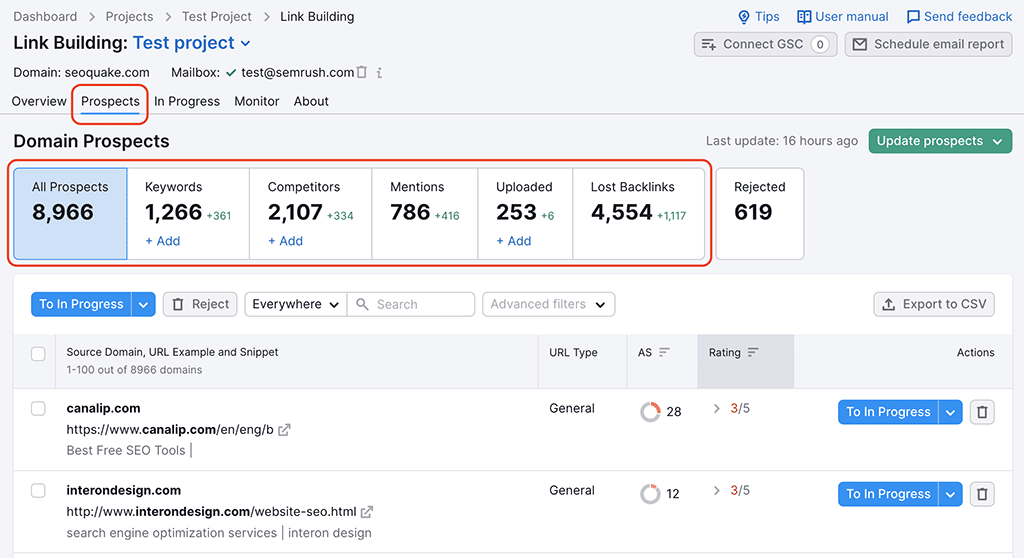
All this can be useful when you’re trying to earn links to category pages, buying guides, or other commercial content that supports your store. And there’s nothing comparable available from Moz.
4. Semrush gives you stronger AI visibility tools
Both platforms let you track brand mentions, prompts, citations, competitors, and sentiment in AI-generated answers. But Semrush goes much deeper than Moz here.
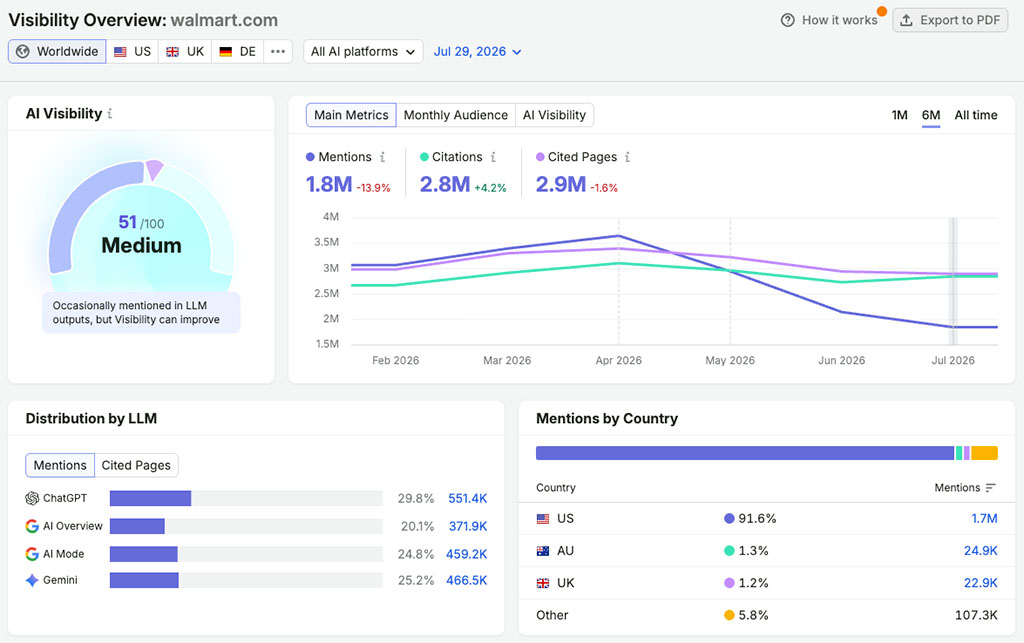
Its Prompt Research tool lets you analyze larger collections of AI prompts, and gives you data that you won’t find in Moz — including estimated AI search volume, search intent, frequently mentioned brands, and frequently cited domains.
For ecommerce businesses, all this can help you understand whether AI platforms are surfacing your products, citing your content, or recommending competing brands instead.
Semrush also refreshes custom prompt tracking daily, whereas Moz only updates it weekly.
5. Semrush isn’t just about SEO and AI visibility
Semrush isn’t just an SEO and AI visibility tool. It also includes PPC research features, competitor advertising data, content planning tools, social media features, local marketing tools, and an app center.
All this matters for ecommerce because growing a store usually involves more than SEO.
As a store owner, you might also be running Google Ads, planning content, researching competitor campaigns, managing social channels, or promoting physical locations.
Semrush lets you do much more of that work from one platform.
User ratings and reviews
So far you’ve heard my thoughts on Moz vs Semrush. But what do real-world users make of both platforms?
The table below shows user ratings from three well-known software review sites. Overall, Semrush holds a narrow lead, with an average overall rating of 4.47 out of 5, compared to 4.25 for Moz Pro.
| Review site | Semrush user rating | Moz Pro user rating |
| Capterra | 4.6/5 (2,329 reviews) | 4.5/5 (350 reviews) |
| G2 | 4.5/5 (3,367 reviews) | 4.3/5 (606 reviews) |
| TrustRadius | 8.6/10 (789 reviews) | 7.9/10 (373 reviews) |
| Average user score (out of 5) | 4.47 | 4.25 |
Moz vs Semrush: the verdict
For me, the Moz vs Semrush decision really comes down to cost versus functionality.
Moz is a strong option if you want solid SEO and AI visibility tools at a low price. It gives you a solid set of tools at a considerably lower price point than many competing SEO solutions.
Semrush costs considerably more than Moz, but gives you much better keyword research features, stronger competitor intelligence, better link-building tools, more advanced AI research, and a much broader marketing toolkit.
Ultimately, if budget matters most, Moz is likely to make more sense.
But if SEO and digital marketing are major growth channels for your ecommerce business — and you’re prepared to pay more for a much more powerful platform — Semrush is the stronger overall option.
FAQs about Moz vs Semrush
Which is better for ecommerce SEO, Moz or Semrush?
Semrush is the better overall choice for ecommerce SEO. It offers more extensive keyword research, stronger competitor analysis, built-in link-building tools, and more sophisticated AI visibility tracking. However, Moz is considerably cheaper than Semrush, while still providing many of the essential SEO tools that smaller online stores need.
Is Moz cheaper than Semrush?
Yes. Moz’s Starter plan costs $49 per month, while Semrush’s entry-level plan combining SEO and AI visibility features costs $199 per month. That’s a considerable difference, but it should be noted that Semrush provides significantly more SEO functionality. Moz is also cheaper than Semrush when it comes to tracking additional domains or adding more users to your account.
Which is better for keyword research, Moz or Semrush?
Semrush is considerably better for keyword research. Its database contains around 28.9 billion keywords, while Moz’s contains 1.25 billion. Semrush also provides more keyword suggestions, along with personalized keyword difficulty scores. This makes Semrush more useful for ecommerce businesses researching new product categories, identifying long-tail buying keywords and planning content.
Which tool is better for running SEO audits?
Moz and Semrush can both help you identify technical SEO problems, including broken links, duplicate content and missing metadata. However, Moz can be a particularly good option for larger ecommerce websites because of its more generous crawl limits. Its $99 Standard plan allows you to crawl around 400,000 pages per project each month; Semrush’s cheapest plan lets you crawl 100,000.
Can Moz and Semrush track visibility in AI search results?
Yes. Both platforms provide AI visibility tools that let you monitor brand mentions, citations, prompts and competitors in AI-generated answers. However, Semrush offers more advanced functionality here, including AI prompt research, estimated AI search volumes and daily custom prompt tracking.
Which tool is better for competitor analysis?
Semrush is the stronger choice for competitor analysis. In addition to providing backlink and keyword ranking data, it offers detailed estimates of competing websites’ organic traffic, insights into their paid-search activity and tools for investigating their AI visibility. Moz provides useful competitor research features too, including a distinctive “Brand Authority” metric, but Semrush gives you a much broader picture of how competing online stores attract visitors.