


Omnisend and Klaviyo are two of the most popular marketing platforms for ecommerce — and at first glance, they look pretty similar. Both let you create email and SMS campaigns, automate customer journeys, segment your audience and track the sales your marketing generates.
But there are some important differences between them — and choosing the wrong tool could mean either paying for sophistication you don’t need, or ending up with a platform that isn’t advanced enough for your business.
So in this Omnisend vs Klaviyo comparison, I’m going to compare the two platforms in six key areas — and help you work out which one is the better fit for you. First up, my quick verdict — then my full comparison.
Quick verdict on Omnisend vs Klaviyo
For most small and midsize ecommerce businesses, Omnisend is the better choice. It’s easier to use, generally offers better value for money, and gives you strong email, SMS, automation and web push tools. Its 24/7 support and free migration service are significant advantages too.
Klaviyo is the stronger option for larger or more data-intensive businesses. Its predictive segmentation, advanced analytics and experimentation tools let you work with customer data in more sophisticated ways, while its customer-service and data-management features make it better suited to businesses that need a broader platform.
Let’s start the full comparison with a look at ease of use.
1. Ease of use
When testing the two platforms, I found Omnisend more straightforward to use.
Its interface is cleaner and more logically organized than Klaviyo’s: it makes the tools you’ll need most often — for creating campaigns, building automations, managing contacts, and checking reports — easier to find.
Omnisend also uses AI neatly to simplify everyday marketing tasks. You can use its AI tools to generate email copy and subject lines, create forms, get product recommendations and build customer segments using plain-English instructions.
That last feature is particularly handy. Rather than manually constructing segments using lots of individual rules, I was able to simply describe the audiences I wanted to create, and let Omnisend build segments for me.
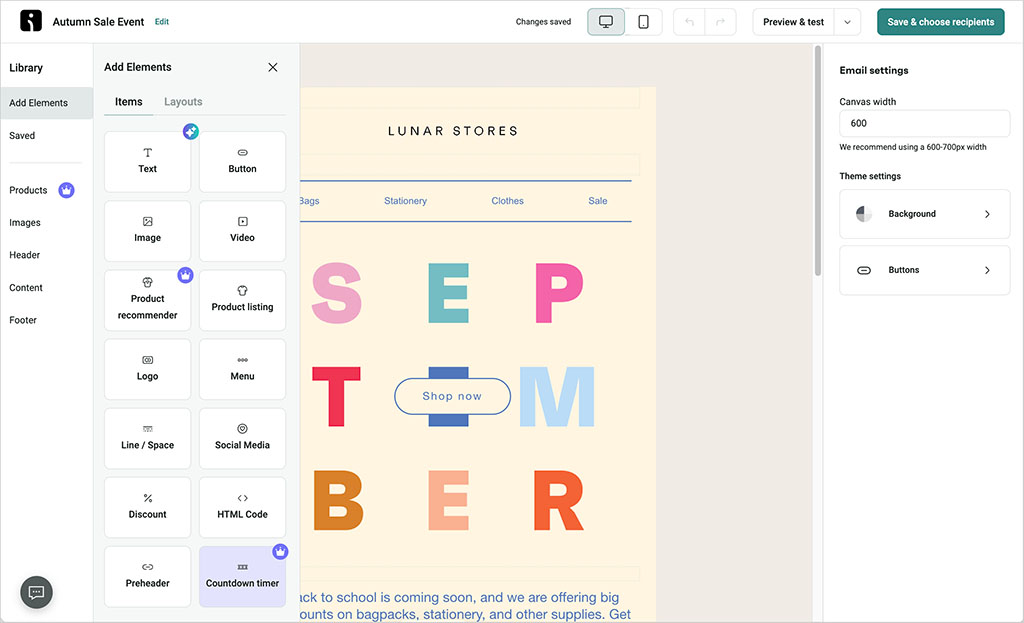
MCP connections with ChatGPT and Claude also make it straightforward to connect the platform to these popular chatbots.
Now, the Klaviyo interface exposes you to a much broader range of analytics, experimentation and customer-data features. These are great for users who need them — but users who don’t may find using Klaviyo a bit overwhelming.
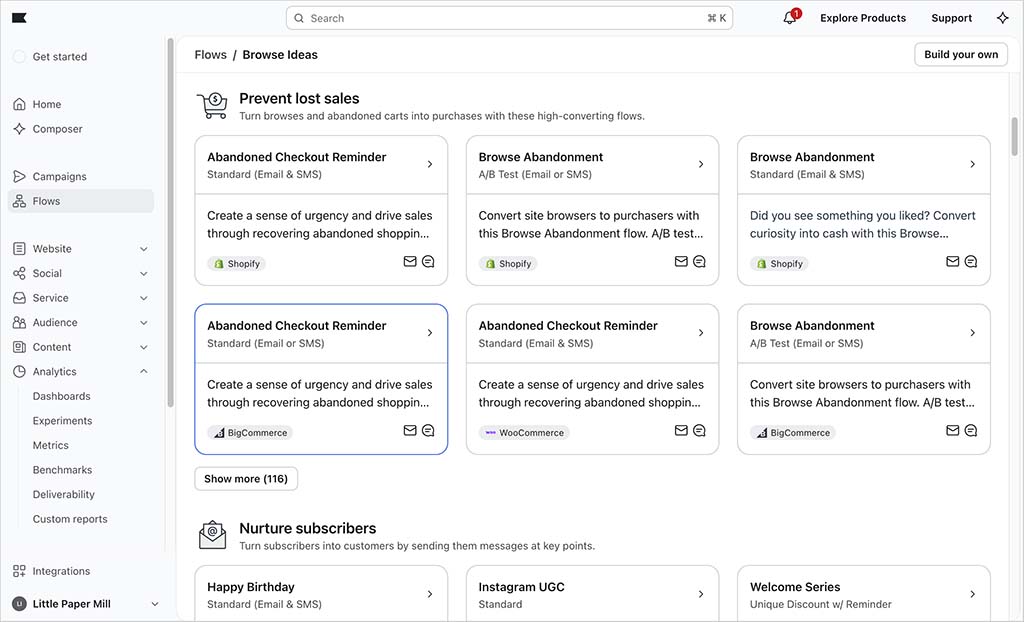
Klaviyo’s automation library (pictured in my screenshot below) illustrates this well. When I accessed it, I was presented with over 500 prebuilt automation flows. That’s an impressive amount of choice — but if you’re running a small store, it might feel like overkill.
So for ease of use, Omnisend gets the win.

2. Value for money
Omnisend probably wins here too. Its “Standard” plan is generally more affordable than Klaviyo’s core marketing subscription.
To work with 5,000 contacts on Omnisend Standard, for example, costs $81 per month. The equivalent Klaviyo charge is $100 per month.
And at 50,000 contacts, the pricing difference becomes even more pronounced — hosting a list this size with Omnisend Standard costs $413 per month, versus $720 per month with Klaviyo Core.
Omnisend gives you savings on SMS as well. For example,
- $50 buys you 5,882 US SMS messages with Omnisend; sending 5,000 US toll-free messages with Klaviyo costs $70.
- I was quoted $90 by Omnisend to send 10,588 messages, but $130 for 10,100 with Klaviyo.
Klaviyo’s mobile messaging offering is broader, however, with support for things like MMS, RCS and WhatsApp.
But Omnisend gives website-based merchants something Klaviyo doesn’t: native web push notifications. These let you re-engage shoppers through their browsers with promotions, product announcements and abandoned-cart messages.
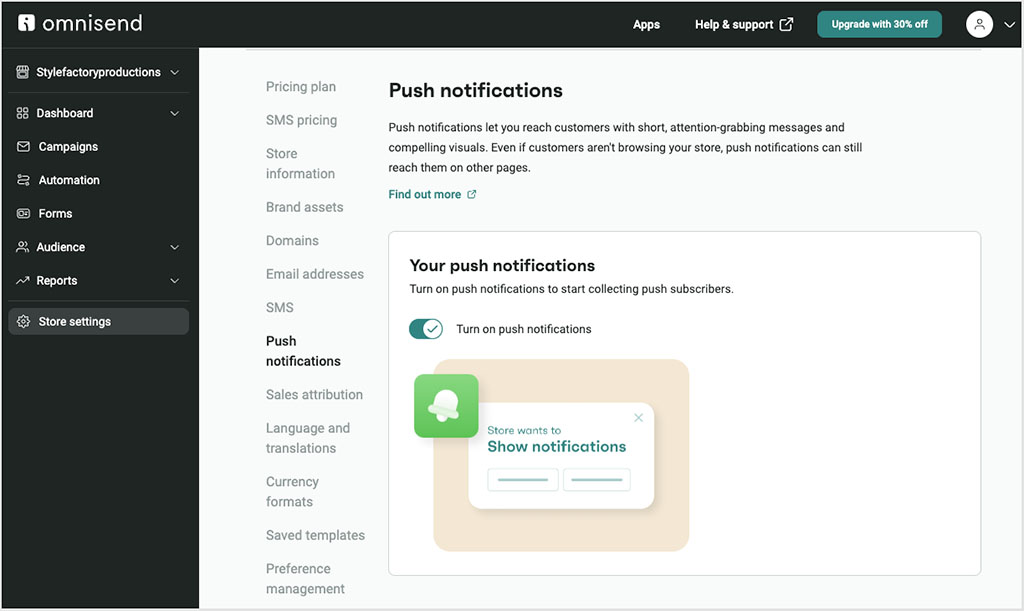
Klaviyo supports push too, but its native option is mobile-app push — so you need your own iOS or Android app to use it.
Ultimately, it’s fair to say that for most small and midsize ecommerce businesses, Omnisend gives you more practical marketing functionality for the money.
Omnisend pricing plan*
Monthly pricing (USD)
Free
$0
Standard
$14
Pro
$41.30
* For lists containing up to 1,000 contacts
3. Data and analytics
Both platforms give you powerful segmentation and reporting tools. But when it comes to using customer data in more sophisticated ways, Klaviyo starts to pull ahead.
Omnisend lets you create segments based on purchase history, engagement, website behavior, average order value, total spend and much more.
But Klaviyo lets you go further, particularly with predictive customer data.
For example, with Omnisend you could create a segment containing customers who have already spent more than $500 but haven’t purchased recently.
Klaviyo can create a segment based on customers who are predicted to spend more than $500 in the future.
That’s a meaningful difference, because it lets an established business target customers based not just on what they’ve done, but on what they’re likely to do next.
Klaviyo also gives you more advanced reporting and experimentation tools. Its global holdout groups, for example, can help you establish whether your marketing is genuinely generating additional purchases — rather than simply taking credit for sales that might have taken place anyway.
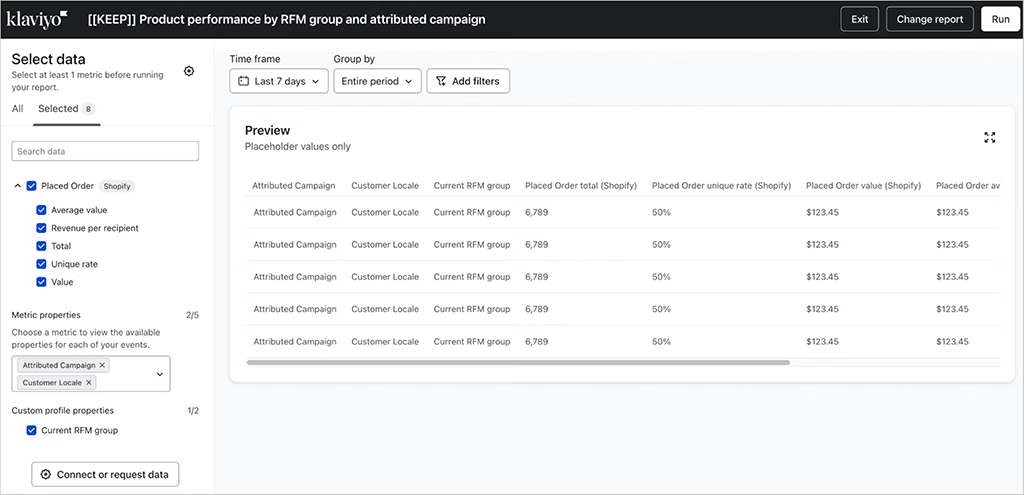
Some of these more advanced features require additional paid products, however — and others are only relevant to very large customer databases. But if sophisticated segmentation, analytics and experimentation are priorities, Klaviyo gets the win here.
4. Managing customer relationships
Omnisend remains primarily focused on ecommerce marketing: campaigns, automations, SMS, push notifications and customer segmentation.
But Klaviyo increasingly goes beyond that. Its “Customer Hub,” for example, gives shoppers a personalized area where they can view orders, manage returns and subscriptions, access loyalty information and discover recommended products.
Its AI-powered Customer Agent can answer questions, recommend products and help with order-related requests. And its Helpdesk feature gives support staff a workspace for managing customer conversations.
So for a larger retailer, Klaviyo can potentially sit at the center of a much broader customer-management operation.
5. Apps and integrations
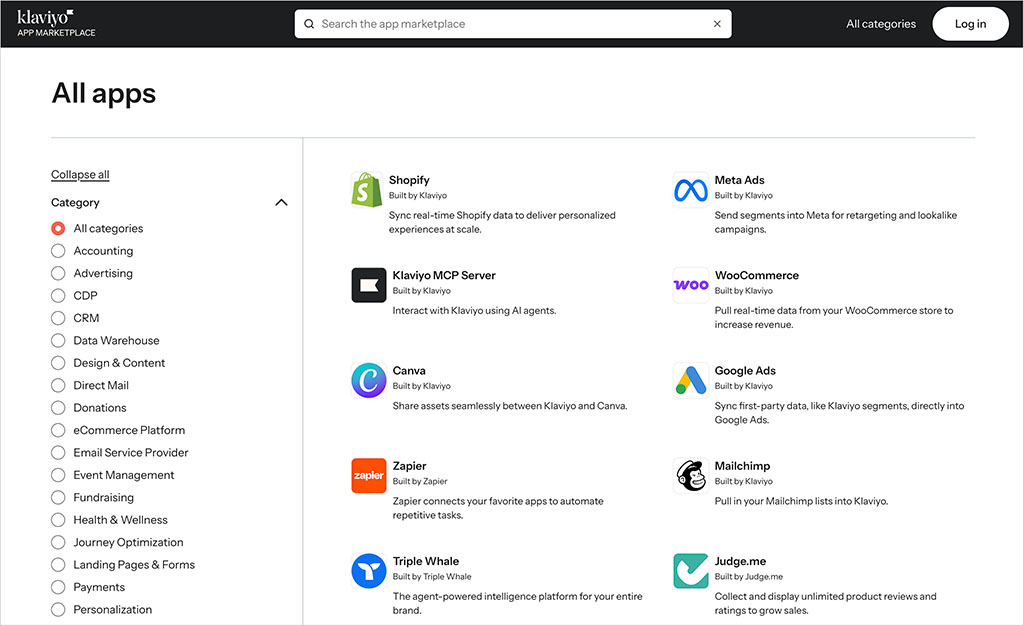
Both platforms offer plenty of integrations, but Klaviyo has the larger ecosystem. At the time of writing, I found 402 integrations available for Klaviyo compared with 287 for Omnisend; Klaviyo supports more ecommerce platforms too — 27 versus 11.
When browsing the two integration directories, I found Omnisend’s app library covered the mainstream ecommerce tools I’d expect most smaller merchants to need.
Klaviyo’s advantage became much clearer once I started looking for enterprise and data-platform connections. It integrates directly with platforms such as Salesforce Commerce Cloud, commercetools and Adobe Commerce (Magento), while Omnisend requires an API-based connection for some of these systems.
Klaviyo also connects with a wider range of data and analytics tools, including Snowflake and Google BigQuery.
So if you have a more complex technology stack, Klaviyo’s integration library gets the win here.
6. Support and migration
Finally, there’s customer support to consider — and this is an area where Omnisend has a significant advantage.
Both platforms provide email and live chat support, but Omnisend makes both available 24 hours a day, seven days a week, on every plan — including its free one.
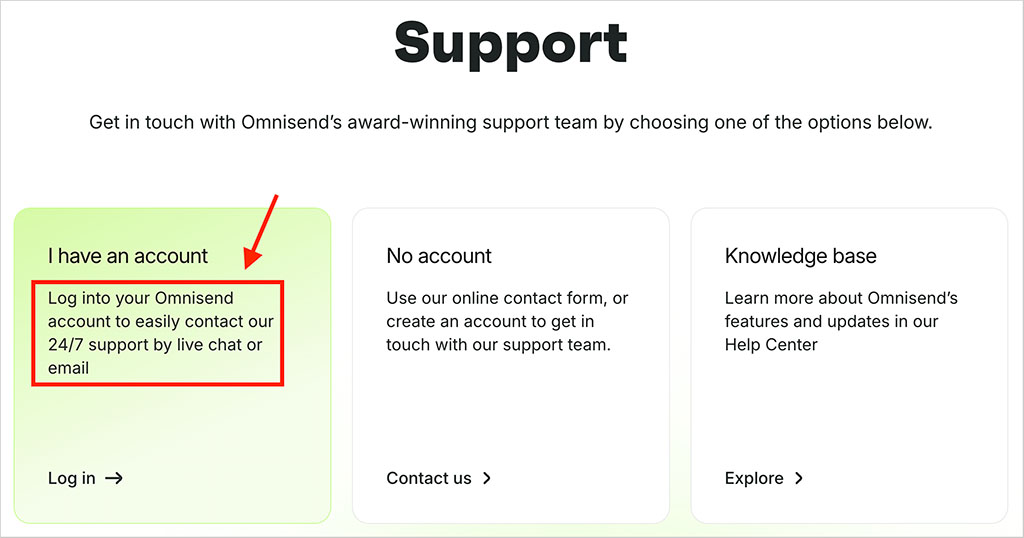
With Klaviyo, paid users get 24/7 email support, but standard live chat support is only available Monday to Friday.
Support hours aside, Omnisend offers something that’s especially useful to smaller merchants: free, hands-on migration assistance. Over a five-day period, Omnisend’s migration team can transfer contacts and rebuild important parts of your existing setup for you, including workflows, segments, forms and templates.
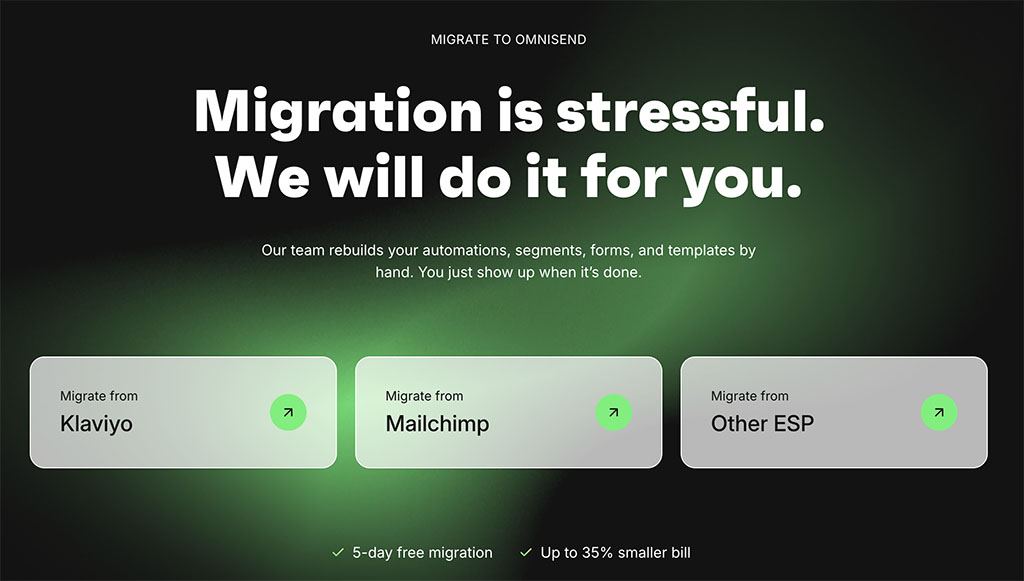
Klaviyo provides detailed migration documentation, but that isn’t quite the same as having someone actually do the work for you.
So for support and getting switched over, Omnisend gets the win.
User reviews and ratings
So far, you’ve heard my thoughts on Omnisend vs Klaviyo. But what do platform users think? To find out, I collated review data from the Shopify app store, WordPress.org and some popular review sites. You can see my findings in the table below:
| Review platform | Omnisend | Klaviyo |
|---|---|---|
| Shopify App Store | 4.7/5 (3,170 reviews) | 4.7/5 (≈3,265 reviews) |
| G2 | 4.6/5 (1,250 reviews) | 4.6/5 (≈1,360 reviews) |
| WordPress.org | 4.9/5 (168 reviews) | 3.0/5 (24 reviews) |
| Trustpilot | 4.4/5 (506 reviews) | 1.7/5 (≈360 reviews) |
| Average (unweighted) | 4.7/5 | 3.5/5 |
Verdict on Omnisend vs Klaviyo
For most small and midsize ecommerce businesses, I’d recommend Omnisend. If your main priorities are email marketing, automations, SMS and web push notifications — and you want those tools in a platform that’s easy to use and reasonably priced — it’s definitely the better fit.
I’d also lean toward Omnisend if you’re moving from another email platform and want hands-on help with the migration.
Klaviyo makes more sense when your requirements are more advanced. If you have a large customer database, a dedicated marketing team, complex segmentation requirements or a need for sophisticated analytics and experimentation, its additional capabilities become much more valuable.
And if you want your platform to handle more than marketing — particularly customer service and customer-data management — Klaviyo is the stronger choice.
So the key question isn’t really which platform has the longest feature list: it’s how much sophistication your business will actually use.
For powerful ecommerce marketing without unnecessary complexity, I’d choose Omnisend.
If you’re running a large, data-intensive business that can take advantage of its additional tools, I’d choose Klaviyo.
Trying Omnisend and Klaviyo for free
I hope you found this comparison useful. If you have any questions about Klaviyo or Omnisend, just leave them for me in the comments.
Written by Chris Singleton based on research by Matt Walsh.

Chris Singleton is the Founder and Director of Ecommercetrix.
Since graduating from Trinity College Dublin in 1999, Chris has advised many businesses on how to grow their operations via a strong online presence, and now he shares his experience and expertise through his articles on the Ecommercetrix website.
Chris started his career as a data analyst for Irish marketing company Precision Marketing Information; since then he has worked on digital projects for a wide range of well-known organizations including Cancer Research UK, Hackney Council, Data Ireland, and Prescription PR. He then went on to found the popular business apps review site Style Factory, followed by Ecommercetrix.
He is also the author of a book on SEO for beginners, Super Simple SEO.