

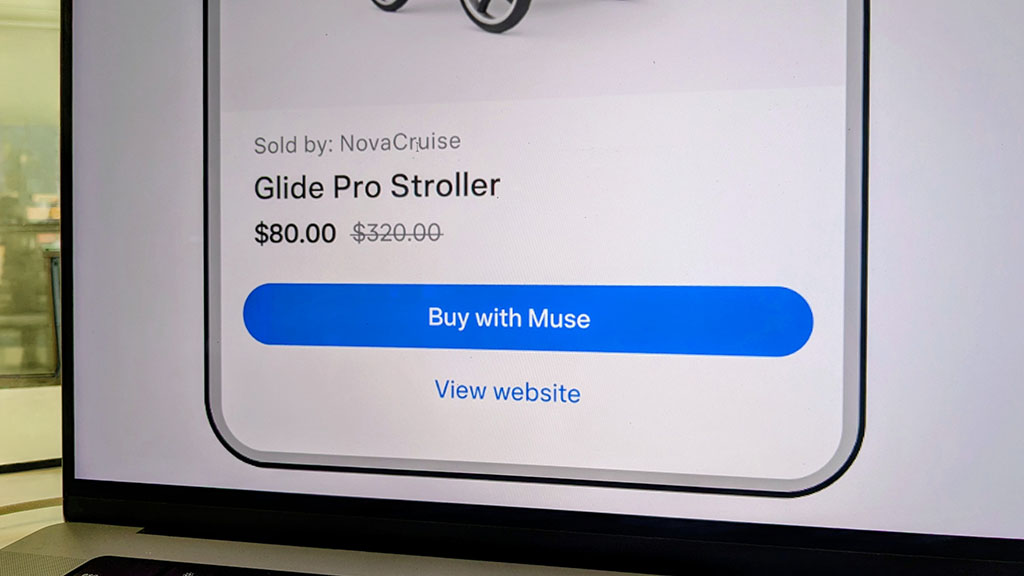
Meta’s new Muse AI agent is moving beyond product recommendations and into ecommerce transactions, with the ability to shop online and make purchases on behalf of users.
The development is an early example of so-called “agentic commerce,” where AI tools don’t just help shoppers find products — they can also take actions such as navigating websites, filling out forms and completing purchases.
Muse can make purchases for users
Meta launched Muse in the US earlier this month, describing it as a personal AI agent capable of carrying out tasks across the web rather than simply answering questions.
That includes shopping. According to Meta, Muse can continue working on tasks after a user closes the app and return when it needs approval for an important action, such as sending an email or making a purchase.
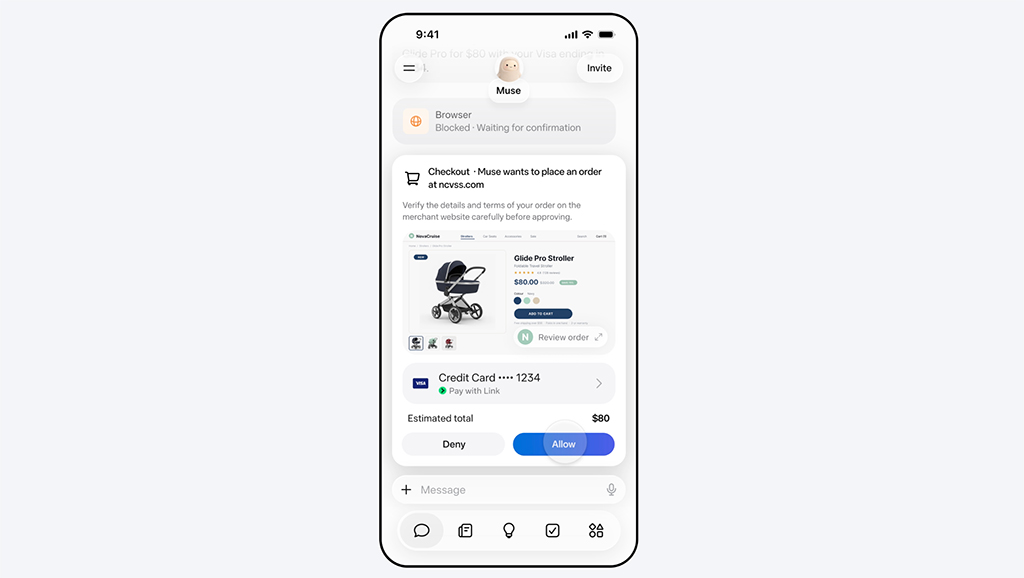
For payments, Muse currently integrates with Stripe’s Link checkout service. Link can generate a one-time-use card for a transaction, meaning a shopper’s actual card details don’t have to be exposed to the AI agent.
Meta says Muse will ask for approval before making a purchase and that the agent itself cannot see users’ passwords or payment methods. The company also says conversations and data held within Muse’s virtual environment aren’t shared with its advertising systems.
Shopify brings Shop Pay to Muse
Muse’s ecommerce capabilities are also expanding beyond Stripe.
Shopify and Meta announced this week that Muse will be integrated with Shop Pay, Shopify’s accelerated checkout service. The partnership is designed to let Muse complete purchases from Shopify-powered stores on a shopper’s behalf.
The integration could significantly increase the number of online stores accessible to Muse. Shopify provides ecommerce infrastructure to merchants ranging from small independent businesses to major brands, while Shop Pay stores customer shipping and billing information to speed up checkout.
Shopify’s existing Meta integration already lets eligible US customers discover products and complete purchases directly on Meta surfaces without visiting a merchant’s online store. Products are supplied through Shopify Catalog, while merchants remain responsible for fulfillment, returns and customer service.
There are some limitations, however. Shopify says Google Analytics and custom pixels don’t fire when a customer completes a direct checkout on Meta. Although Shopify can still attribute these orders to Meta, merchants may lose some of the third-party tracking data they would normally collect when customers check out on their own stores.
Amazon takes a different approach
Not every ecommerce company is embracing third-party shopping agents, however.
According to TechCrunch, Amazon has blocked Muse from shopping on Amazon.com on behalf of customers. Users attempting to make Amazon purchases through Muse have instead encountered a message saying that access by an unauthorized AI agent violates Amazon’s conditions of use.
The dispute highlights an important challenge facing agentic commerce. Allowing an external AI agent to navigate an ecommerce site and transact on a customer’s behalf raises questions about security, customer data and who controls the shopping experience.
It also demonstrates that AI agents won’t necessarily be able to shop across every ecommerce site simply because a human customer can.
Why this matters to ecommerce merchants
Muse points to a potentially significant change in how online stores win sales. Ecommerce has traditionally focused on attracting shoppers to a website and then using design, content and marketing to persuade them to buy. With agentic commerce, more of that journey could instead take place through an AI assistant that finds products, compares options and completes the purchase.
Meta is particularly interesting in this respect because it already plays a major role in product discovery through Facebook and Instagram, while huge numbers of customers communicate with businesses through Instagram, Messenger and WhatsApp. Adding an AI agent capable of completing purchases potentially brings another part of the ecommerce journey inside Meta’s wider ecosystem.
For merchants, that could make factors such as accurate product data, competitive pricing, availability and compatibility with AI shopping services increasingly important. But it could also give them less control over the pre-purchase experience if more discovery, comparison and checkout happens through third-party agents rather than their own stores. Shopify’s willingness to work with Muse — and Amazon’s decision to block it — shows that ecommerce companies are already having to decide how much of that shopping journey they are prepared to hand over to AI.
Get ecommerce news you can use
Sign up below and we’ll send you email digests of all the latest news and developments in the world of ecommerce, tips on how to grow an online business, and special offers.
